How to Buy Your First Home in India 2026: Step-by-Step Guide
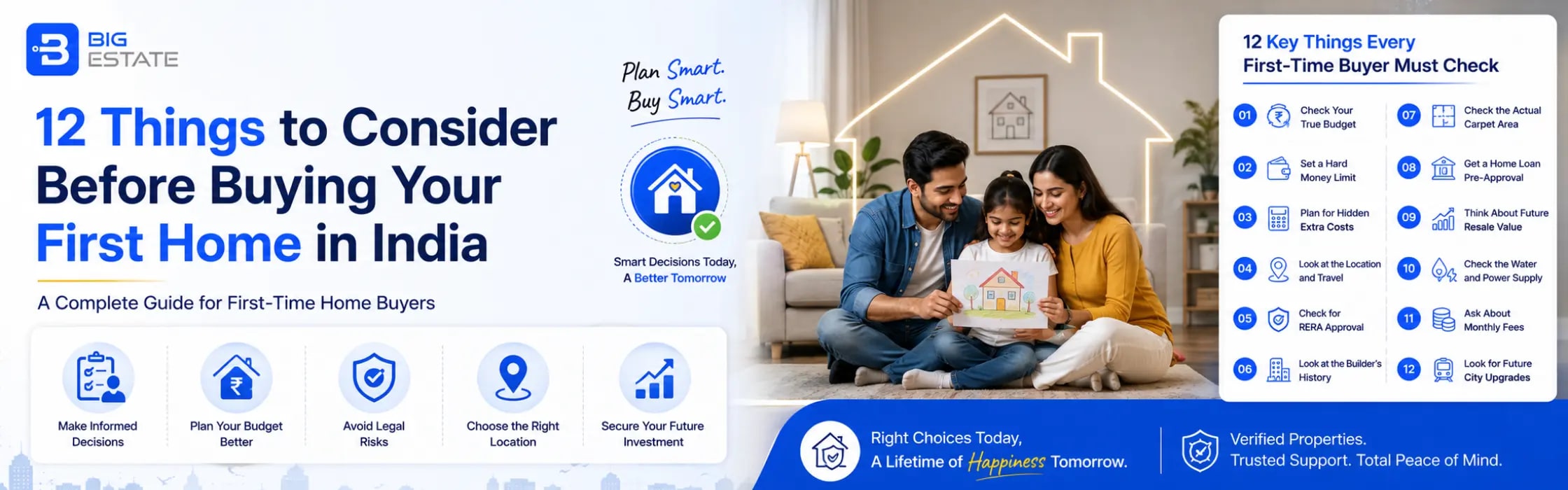
Buying a house for the first time involves loan approvals, legal paperwork, taxes and several financial decisions. When these steps are rushed or overlooked, problems can surface months or even years later. Understanding the full home buying process upfront can make the journey easier, especially for first-time buyers comparing eligibility, documentation, property prices and financing options.
A little preparation can help buyers avoid common mistakes like overlooking important documents and underestimating the total cost of purchase. Knowing what to check at each stage makes the process more manageable.
Quick Facts: What First-Time Buyers Should Know
| Factor | Typical / Indicative Range |
|---|---|
| Minimum CIBIL score | Around 700+ may be considered by many lenders; 750+ can strengthen eligibility |
| Loan-to-value ratio | Up to 90% for eligible lower-value loans; up to 80% for loans above ₹30–75 lakh; up to 75% above ₹75 lakh |
| Buyer contribution / down payment | Typically 10–25%+, depending on loan amount, lender, property value and eligibility |
| Stamp duty | State-dependent; commonly around 3–8% |
| Registration charges | State-dependent; often around 1% |
| GST on eligible under-construction residential property | 5% for non-affordable housing; 1% for qualifying affordable housing |
| Additional purchase costs | Vary by property, state and transaction |
Step 1: Check Home Loan Eligibility Before You Start Browsing
Home loan eligibility is evaluated on a combination of factors given below:
- Age: Typically 21-65 years for salaried applicants and 23-70 years for self-employed applicants.
- CIBIL score: A minimum of around 700 is generally expected; 750+ unlocks better rates.
- Income stability: 1-2 years of stable employment or 3+ years in business (self-employed).
- FOIR limit: Total EMI obligations usually shouldn't exceed 40 to 55% of gross monthly income.
- Loan-to-value ratio: Banks typically finance 75 to 90% of the property's value.
Adding an earning co-applicant can raise your eligibility as their income adds to the combined loan capacity banks consider.
Step 2: Understand the Real Cost of Buying a House
Most first-time buyers budget only for the property price and get caught off guard later. The actual cash required on or before registration is higher:
| Cost Component | Typical Range |
|---|---|
| Stamp duty | 3-8% of property value |
| Registration charges | 1% of property value |
| GST (under-construction only) | 5% of construction cost |
| Brokerage, legal fees, deposits | 3-5% combined |
On a ₹1 crore property, stamp duty, registration, applicable GST, brokerage, legal fees and other transaction costs can add significantly to the purchase price. Home-loan financing generally does not cover these costs in the same way as the property value, so buyers should confirm the lender's terms and arrange sufficient funds separately. The exact amount depends on the property's location, type and applicable tax and fee rules, so buyers should calculate these costs before finalising their budget.
Step 3: Choose the Right Property Type
The right property type depends on your budget, lifestyle, expected possession timeline and long-term plans. Consider whether a ready-to-move-in or resale property suits your needs, or whether an under-construction project is worth considering for a lower entry price and potential customisation.
Apartments may offer easier maintenance and access to shared amenities, while independent houses provide greater control over the property. Compare the costs, maintenance requirements, location, possession timeline and resale prospects before deciding.
Step 4: Shortlist Locality and Decide Where to Buy Property in India
Once the budget is sorted, the next question is where to buy property in India and this decision should factor in more than just the price. Look at:
- Planned metro and expressway connectivity in the area.
- Whether the locality is part of an upcoming infrastructure project.
- Resale demand and rental yield in the neighbourhood.
- Whether you're buying resale (immediate possession, verifiable history) or under construction (lower entry cost, delivery risk).
Step 5: Verify the Property and Legal Documents
Before paying a booking amount or signing an agreement, verify the property's ownership, approvals and legal status. Depending on the property and location, relevant documents may include:
- Title deed and ownership chain
- Encumbrance certificate
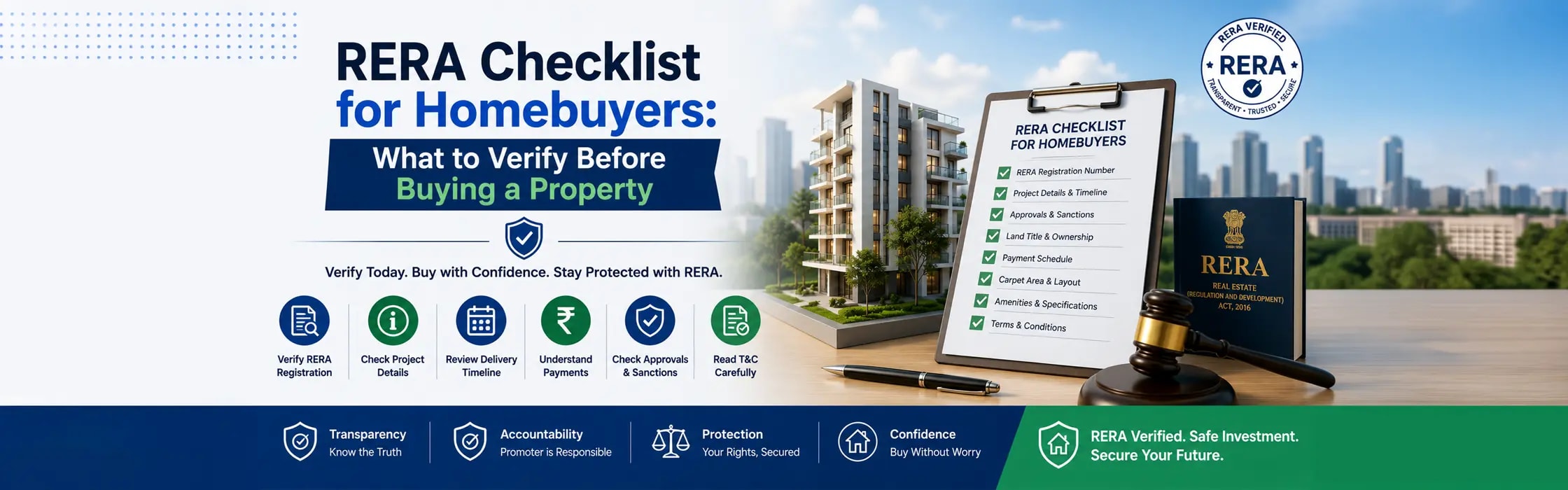
- RERA registration details, where applicable
- Occupancy and completion certificates, where applicable
- Property tax records
- Approved building plan
- Relevant ownership and approval documents
For a detailed document-by-document guide, read How to Verify Property Documents Before Buying a Home in India before making a major payment.
If you are unsure about the legal status of a property, consider having the documents reviewed by an independent property lawyer.
Step 6: Compare Home Loan Offers Across Lenders
Don't automatically choose your regular bank. Compare offers from different banks, NBFCs and housing finance companies based on the applicable interest rate, loan tenure, EMI, processing charges, prepayment terms and other associated costs.
Your final eligibility and loan terms will depend on the lender's assessment of your income, credit profile, existing obligations and property.
Step 7: Review the Sale Agreement and Complete Registration
Before signing the sale agreement, carefully review the payment schedule, possession date, cancellation terms, penalties, included amenities and other obligations of both parties. Any important commitment made by the seller or builder should be reflected in the agreement.
Once the transaction is ready for registration, complete the sale deed and registration process through the applicable sub-registrar's office. Stamp duty and registration charges vary by state and transaction, so confirm the applicable charges before finalising your budget.
Registration requirements and applicable charges can differ based on the property and location, so verify the latest requirements with the relevant authority.
Step 8: Consider Home Insurance Before Possession
Home insurance can protect the property and its contents against covered risks such as fire, natural disasters and theft, depending on the policy. If you are financing the purchase, check whether your lender has any insurance-related requirements.
Review the policy coverage, exclusions, premium and insured amount before choosing a policy.
Step 9: Do a Final Inspection Before Taking Possession
Walk through the property before taking possession and check the construction quality, walls, flooring, doors, windows, electrical fittings, plumbing, fixtures and other promised specifications.
Compare the completed property with the agreed specifications and note any defects or unfinished work. Where applicable, get outstanding issues documented and addressed before completing the possession process.
Documents Required to Buy Your First Home
Keep these ready before you start the process:
- Identity proof: Aadhaar, PAN card, passport or voter ID
- Address proof: Utility bill, Aadhaar or rental agreement
- Income proof: Salary slips, Form 16, IT returns or bank statements (for self-employed applicants, business proof and 2 to 3 years of ITRs)
- Property documents: Title deed, encumbrance certificate, approved building plan, occupancy/completion certificate
- RERA registration details: For under-construction properties
- Passport-sized photographs: Of buyer, co-applicant and seller
- No Objection Certificate (NOC): From the housing society or builder where applicable
- Sale agreement and sale deed: Drafted and reviewed before registration
Home Buying Tips Worth Remembering
- Get your income documents updated before applying for a loan.
- Don't skip RERA verification just because a broker vouches for the project.
- Budget stamp duty, registration and GST separately from the loan amount.
- Check for pending litigation on the property.
- Compare at least three lenders before finalising a home loan.
- Treat home insurance as a requirement.
Under-Construction vs Ready-to-Move-In
| Factor | Under-Construction | Ready-to-Move-In |
|---|---|---|
| Price | Generally lower | Higher |
| GST | 5% applicable | Not applicable (with OC issued) |
| Possession | Delayed, depends on builder timeline | Immediate |
| Risk | Delivery delays, project stalling | Lower |
| Verification | RERA registration is critical | Title and occupancy certificate checks matter most |
| Customisation | Some flexibility on finishes/layout | Little to none |
Also Read: Ready-to-Move vs. Under Construction: Which Is the Better Investment?
Common Mistakes First-Time Buyers Make
- Skipping RERA verification on a broker's assurance alone.
- Choosing a home because it's cheaper.
- Ignoring construction quality.
- Not budgeting for stamp duty, registration and GST separately.
- Ignoring home insurance since the property is already mortgaged.
- Skipping the final inspection and ignoring exit strategy.
Also Read: 10 Real Estate Investment Mistakes Every First-Time Buyer Should Avoid
First-Time Home Buyer Checklist
- Home loan eligibility checked and pre-approved.
- Full cost calculated, including stamp duty, registration and GST.
- Locality shortlisted based on connectivity as well as infrastructure.
- Property type decided (resale vs under-construction, apartment vs independent house).
- Title deed, encumbrance certificate, and RERA status verified.
- Loan offers compared across at least three lenders.
- Sale agreement reviewed and terms understood.
- Property registered at the sub-registrar's office.
- Home insurance arranged before possession.
Also Read: Home Buying Checklist: 15 Things Every Buyer Should Verify
Conclusion
Buying your first home in India becomes easier when you approach the process step by step instead of rushing toward a booking decision. Start by checking your loan eligibility and total budget, then choose the right property type, compare locations and properties, verify the legal documents and evaluate your financing options.
Before signing the agreement or paying a significant amount, make sure you understand the property's ownership, approvals, total costs, possession timeline and loan terms. A final inspection before possession can also help identify issues while there is still an opportunity to get them addressed.
Whether you're buying a ready-to-move-in home, a resale property or an under-construction project, taking time to compare your options and verify the details can help you make a more informed decision. Platforms like Big Estate can make property discovery and comparison easier by bringing listings and project information together in one place.