How to Verify Property Documents Before Buying a Home in India
Buying a home is the biggest financial decision most people have to make in their lifetime. Yet a surprising number of buyers focus entirely on the price and the location. That gap is exactly where property disputes and years of legal trouble tend to start. Property verification and verifying property documents properly is the step that decides whether the property you're paying for is actually the property you'll legally own. This blog walks you through what to check, how to check it and where buyers go wrong.
Legal Property Documents Every Buyer Should Check
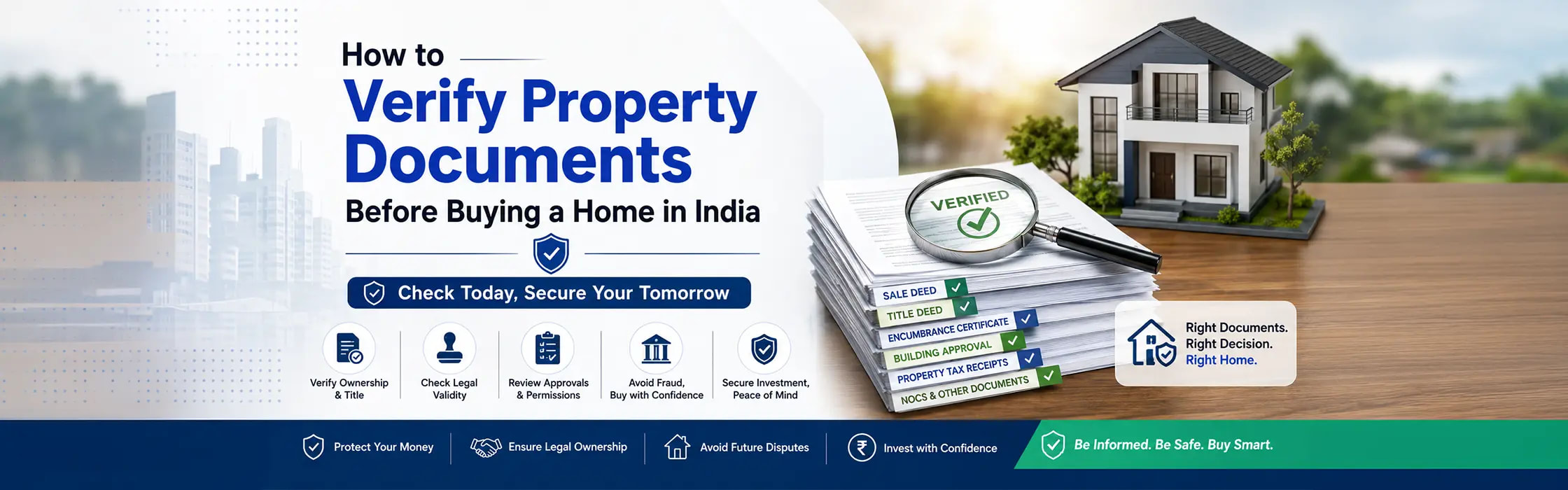
These are the legal property documents worth reviewing and ideally with a property lawyer involved:
1. Title Deed: Confirms current legal ownership and the chain of previous owners. This is the single most important document in the entire transaction.
2. Mother Deed: It traces the origin of the property's ownership history over the years and is especially relevant for older properties.
3. Sale Deed: The actual document that transfers ownership once the transaction is complete.
4. Encumbrance Certificate: Shows whether the property has any existing loans, mortgages or legal claims attached to it.
5. Property Tax Receipts: Confirm that all municipal dues have been paid to date by the current owner.
6. Occupancy Certificate (OC): Certifies that the building has been constructed as per approved plans and is fit for occupation.
7. Completion Certificate (CC): Confirms the construction has been completed in line with sanctioned plans.
8. Approved Building Plan: Verifies the layout matches what was legally sanctioned by local authorities.
9. Khata Certificate or Mutation Record: Reflects the property's verification in local municipal records, which is important for future tax and resale purposes.
10. No Objection Certificates (NOCs): From relevant authorities such as fire, environment, or pollution control boards, depending on the project.
How to Verify Property Documents Step by Step
Here's a practical step to address the above concern:
1. Request the original documents – Sellers should be able to produce the original property documents. If the originals are held by a bank due to an existing loan, this should be disclosed upfront.
2. Trace the ownership chain – Review the complete ownership history to confirm that there are no breaks, disputes, or inconsistencies in the title.
3. Run an encumbrance check – Visit the local sub-registrar’s office or use the state’s online land records portal to check for existing loans, liens, or other encumbrances.
4. Confirm that tax and utility dues are cleared – Ask for the latest property tax receipts and utility bills to ensure there are no outstanding dues that could become the new owner’s responsibility.
5. Check the building approvals – Verify the occupancy certificate, completion certificate, and approved building plan to ensure the property has the required approvals.
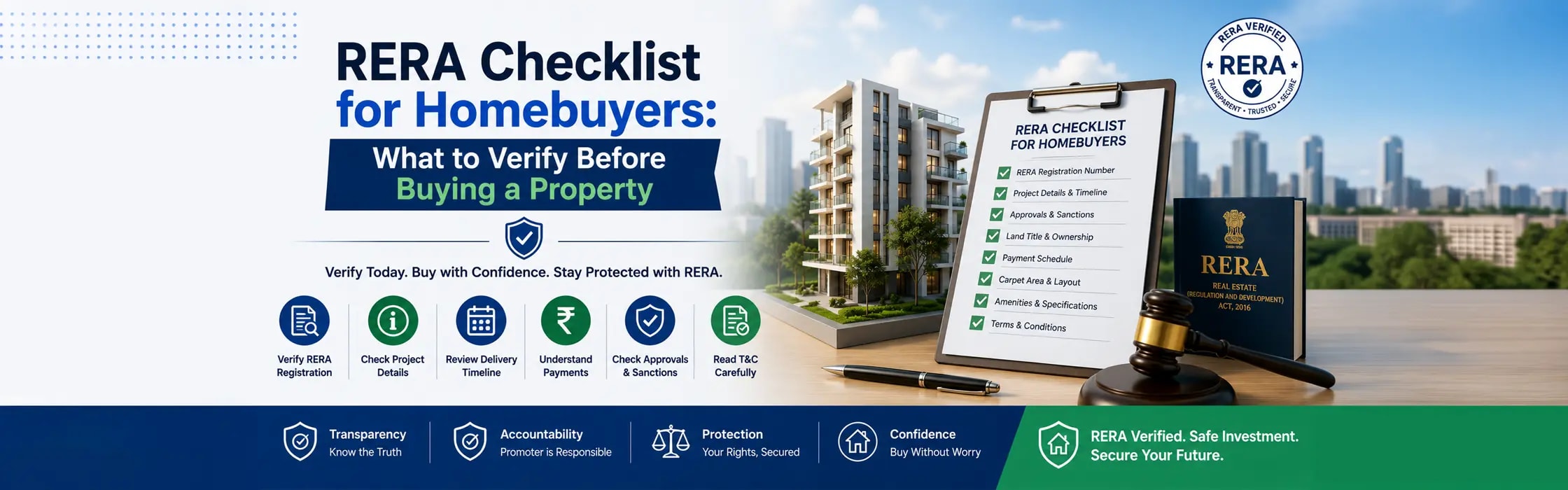
6. Verify RERA registration – If the property is part of a real estate project rather than a resale, check its RERA registration and related project details.
7. Get a lawyer to review everything – As part of the property verification process, have a property lawyer review all documents and flag potential legal issues that may not be obvious to a first-time buyer.
RERA Registration: What It Means and How to Check It
The Real Estate (Regulation and Development) Act or RERA, was enacted in 2016, with full implementation from May 2017 and it established Real Estate Regulatory Authorities in each state to regulate the sector and protect buyers. If you're buying into a project, RERA registration is one of the indicators of legitimacy.
Each state and union territory in India has its own RERA authority and an online portal for project verification and it's important to use the portal for the specific state where the property is located.
To check RERA registration, you need to check the following:
1. Visit the official RERA portal for the state where the property is situated.
2. Navigate to the 'Registered Projects' or 'Project Search' section and search using the project name, location or the developer name.
3. Cross-verify the project name, promoter name and RERA number against what's shown in the sales brochure.
4. Review the proposed date of completion.
5. Check for financial details, including any encumbrances on the land.
6. Look specifically for any litigation or complaints filed against the project.
If a project doesn't show up on the official portal at all, treat that as a serious warning. Some projects are legitimately exempt - for instance, land parcels of 500 square metres or less with eight or fewer apartments or projects completed before RERA's implementation, so it's worth asking the developer for a written explanation.
Common Mistakes That Buyers Make
A few patterns show up again during property documents verification, a few patterns show up again and most are avoidable with basic diligence:
1. Relying entirely on the broker's word instead of independently verifying documents.
2. Paying a booking amount before checking the title or RERA status.
3. Assuming a bank loan approval means the property's legal status is automatically clean.
4. Not checking for pending litigation tied to the land.
5. Overlooking mutation records, which can cause complications years later.
Conclusion
Buying a home is not just about finding the right location and price. It is equally important to confirm that the property has a clear ownership history, valid approvals, no undisclosed encumbrances, and the required regulatory documents.
Before paying a booking amount or signing the final agreement, verify the title, ownership chain, encumbrance records, approvals, RERA details where applicable, tax dues, and occupancy-related documents. For a high-value transaction, having an independent property lawyer conduct legal due diligence can help identify issues that may not be obvious from the documents alone.
Big Estate makes your property search easier by helping you discover verified properties, compare options, and connect with trusted developers.
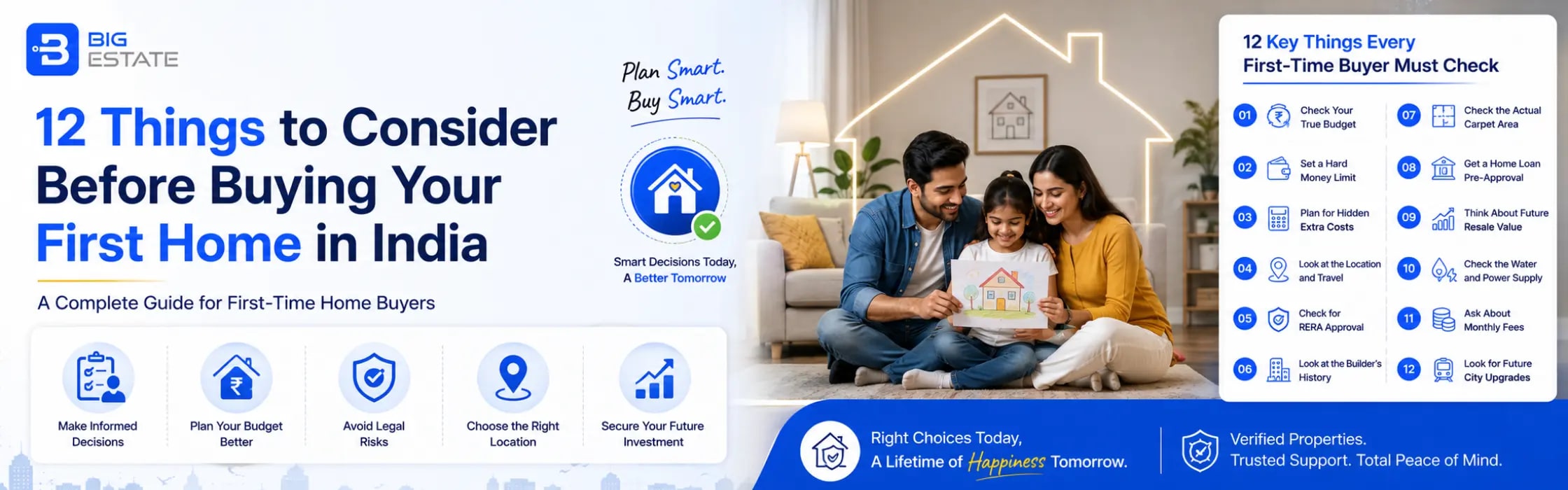
Also Read: 12 Things to Consider Before Buying Your First Home in India