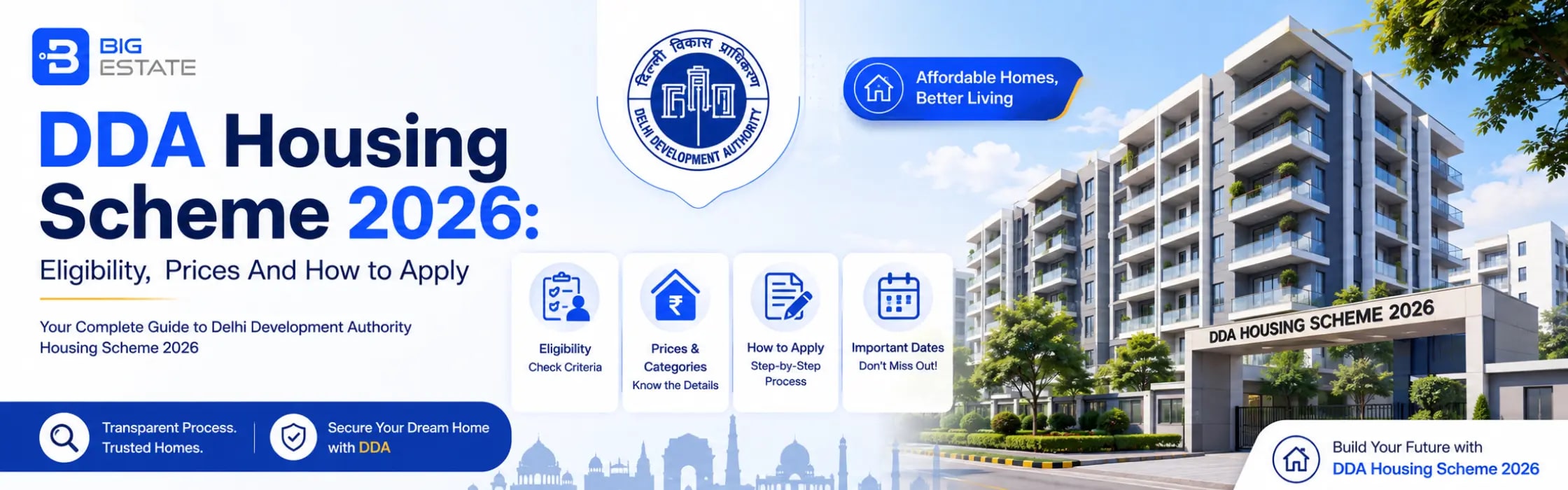
DDA Housing Scheme 2026: Eligibility, Prices And How to Apply
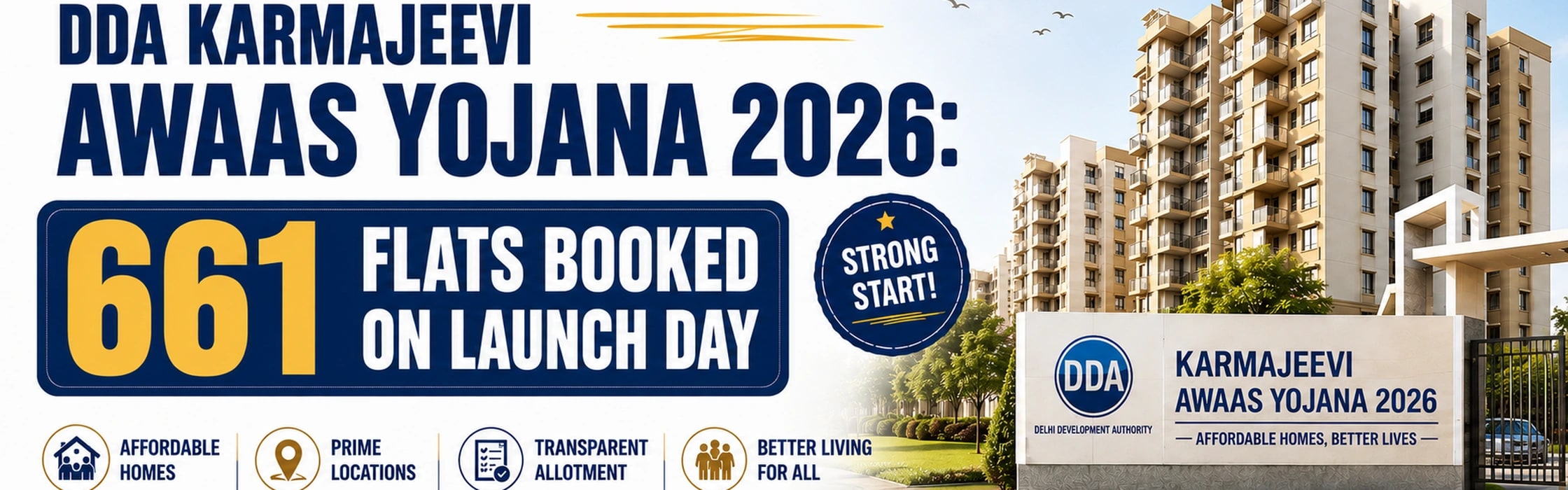
Delhi's property prices have made owning a home in the capital feel out of reach for a large section of buyers. This is exactly the gap the DDA Housing Scheme 2026 fills. It is run by the Delhi Development Authority and remains one of the few routes to a government-backed flat in the city at a fraction of open market rates.
This blog explains eligibility, pricing and the application process based on the latest available scheme details.
What Is the DDA Housing Scheme 2026?
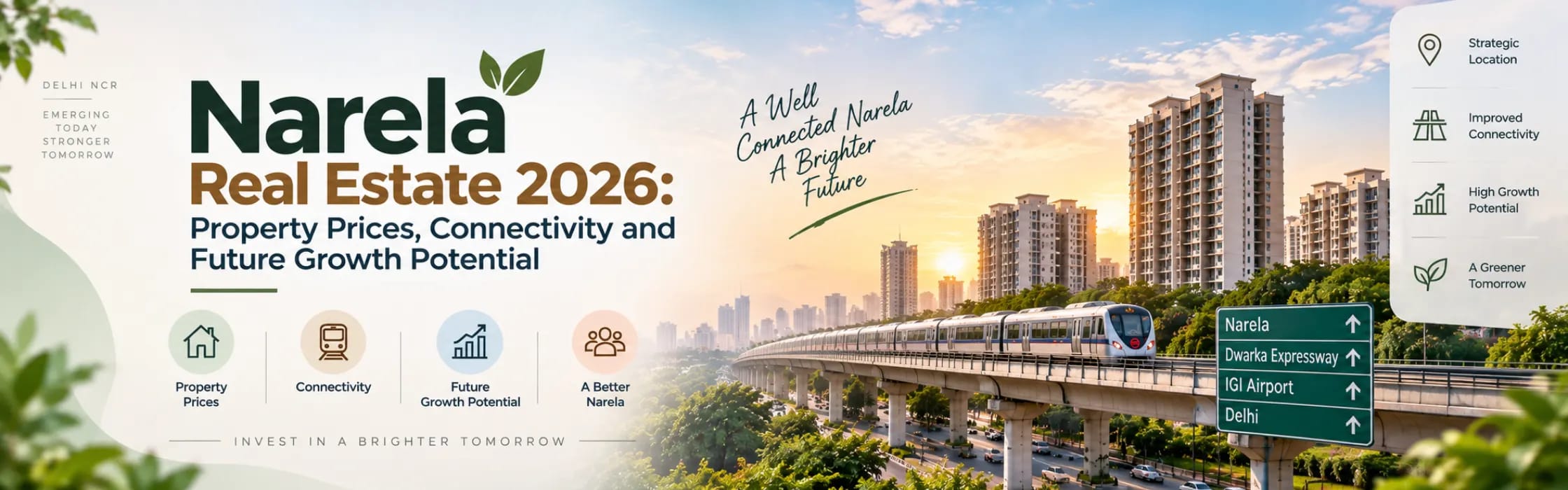
The DDA Housing Scheme 2026 offers residential flats in multiple income categories, which are also affordable through a transparent allotment process with registration and application handled online. The scheme covers multiple income brackets like the EWS, LIG, MIG, and HIG and flats are spread in established Delhi localities including Dwarka, Rohini, Narela, Vasant Kunj and Jasola.
The change in the 2026 cycle is that DDA is using "First Come First Serve" and lucky draw allocation that depends on category and the location of the flat. The scheme has also expanded to the premium units in Dwarka Sector 19B and Sector 14 and offers discounts on EWS and LIG flats in Narela.
DDA Flats: Categories and What They Offer
DDA flats are grouped by income category and each comes with a different size range and set of amenities:
1. EWS (Economically Weaker Section) - units around 25 to 30 sq. m., with basic amenities and the lowest price.
2. LIG (Low Income Group) - Slightly larger units in the 30 to 60 sq. m. range, for small families.
3. MIG (Middle Income Group) - Units between 60 to 90 sq. m., including lifts and parking.
4. HIG (High Income Group) - Units above 90 sq. m., located in more central pockets with upgraded facilities.
Eligibility for DDA Housing Scheme 2026
Eligibility is based on income, citizenship and existing property ownership. Requirements vary by source and scheme cycle, so treat the figures below as a general guide and confirm exact limits on the official DDA portal before applying.
General conditions:
1. Applicant must be an Indian citizen, generally above 18 years of age.
2. The applicant, along with their spouse and children, must not already own a residential flat or plot larger than 67 square meters anywhere in Delhi. This is one of the most strictly enforced conditions.
3. Only one application is permitted per applicant per scheme.
4. Joint applications with a spouse are allowed under most scheme variants.
5. Reserved category benefits apply to women, senior citizens, SC/ST applicants and differently abled applicants, as per standing government rules.
Income-based categories:
Different sources quote slightly different income brackets for MIG and HIG, so these numbers should be verified at the time of application:
1. EWS - Annual family income up to ₹3 lakh.
2. LIG - Annual family income between ₹3 lakh and ₹6 lakh.
3. MIG - Annual family income generally falls between ₹6 lakh and ₹12- 18 lakh, depending on the scheme cycle.
4. HIG - No fixed income ceiling in most cycles, though applicants must show financial capacity to purchase and maintain the property.
A false income declaration can lead to cancellation of allotment and forfeiture of the deposited amount.
DDA Housing Scheme 2026 Prices
Pricing depends heavily on category, location, and which specific scheme you're applying under. Based on the recent scheme cycles:
| Category | Approximate Price Range |
|---|---|
| EWS | ₹7 lakh - ₹19 lakh |
| LIG | ₹19 lakh - ₹40 lakh |
| MIG | ₹1.3 crore - ₹1.5 crore |
| HIG | ₹1 crore - ₹3 crore+ |
Registration Fees and Deposits
1. Registration fee - A one-time, non-refundable fee of around ₹2500 is charged while creating an account on the DDA Awaas portal.
2. Booking/EMD amount - This ranges from ₹50000 for EWS applicants up to ₹10 lakh for HIG applicants, with LIG and MIG falling in between. Auction-based schemes charge higher EMD amounts, sometimes up to ₹15 lakh for HIG units.
3. Refund policy - EMD is refundable for unsuccessful applicants but forfeited if a bidder backs out or fails to complete payment.
How to Apply for DDA Housing Scheme 2026?
The application process runs entirely online through the DDA portal. The typical steps are:
1. Create an account on the official DDA Awaas portal using your PAN details.
2. Register for the scheme and pay an applicable registration fee.
3. Review available flats by category, location and price before shortlisting.
4. Submit your application along with the required EMD or booking amount.
5. Save your login credentials and track your application status through the portal.
6. Check the draw or auction result once the process closes and allotment can happen via lucky draw, FCFS or e-auction depending on the scheme.
Documents generally required:
- Valid PAN card
- Aadhaar or other government ID
- Income certificate (mandatory for EWS applicants and should reflect the current financial year)
- Bank account details for refunds and payment processing
- Passport-sized photographs
Why Buyers Choose DDA Flats?
DDA flats attract buyers for a few consistent reasons:
1. Clear property title
2. Lower stamp duty
3. Established locations (Areas like Dwarka, Rohini, and Vasant Kunj)
4. Loan accessibility
5. Transparent process
Points to Keep in Mind Before Applying
1. Confirm which specific DDA scheme you're applying under - regular scheme, Nagrik Awaas Yojana or the Premium e-auction scheme all have different timelines and fee structures.
2. Don't assume income limits are fixed year to year. Verify the exact bracket for MIG and HIG before selecting a category.
3. Factor in additional costs like GST, maintenance charges and conversion charges that are usually excluded from the listed disposal price.
4. If applying under EWS, get your income certificate updated for the current financial year.
5. Arrange financing in advance. Successful bidders in auction-based schemes are often required to pay the bulk of the amount within 30 to 45 days.
Conclusion
Buying a home is still a decision built on trust. Trust in the title, the process and the numbers you're being shown. A government scheme like this one earns that trust through transparency, but the paperwork, deadlines and category rules can still overwhelm a first-time applicant.
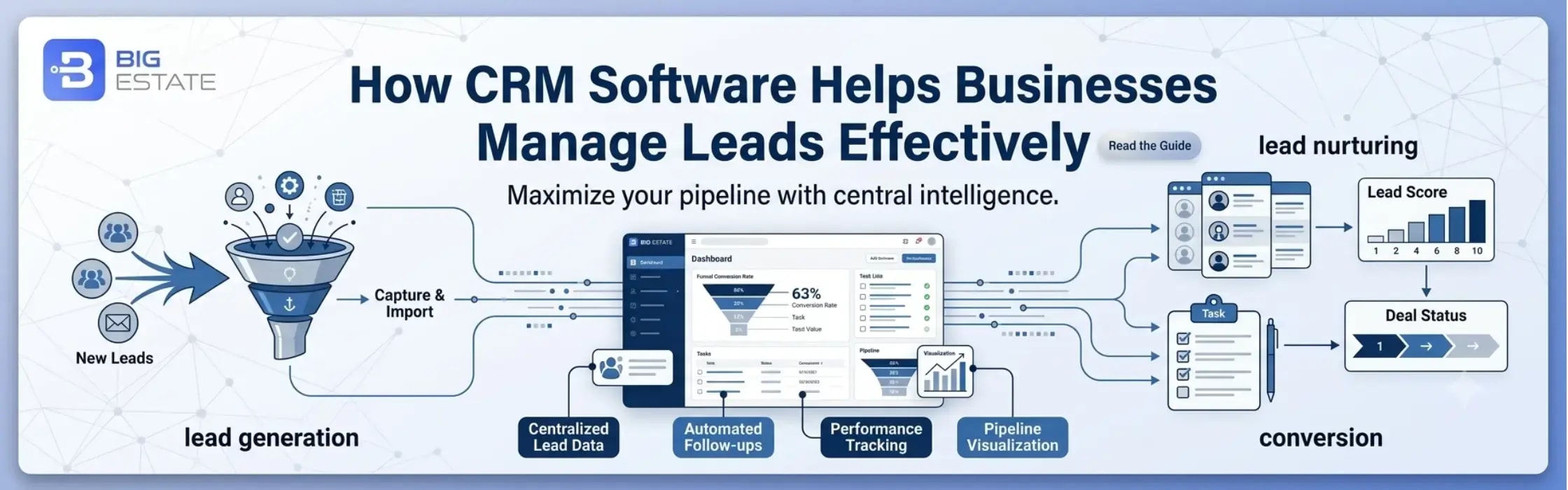
That's where a platform like Big Estate fits in. It keeps all the information about properties in one place. This includes when people ask about properties, when they talk to us about buying and when they send in their applications. So if you are someone who wants to buy a property and you are waiting to hear about your DDA application or if you are an agent who is helping lots of people buy properties, Big Estate makes sure everything is organised. This means that nothing gets forgotten and everything is easy to find. Big Estate keeps every property inquiry, every buyer conversation and every application update organised in one place.
Note: DDA scheme details, including exact income limits, prices and dates, vary across scheme cycles and are subject to change. Always confirm current details on the official DDA portal before applying.