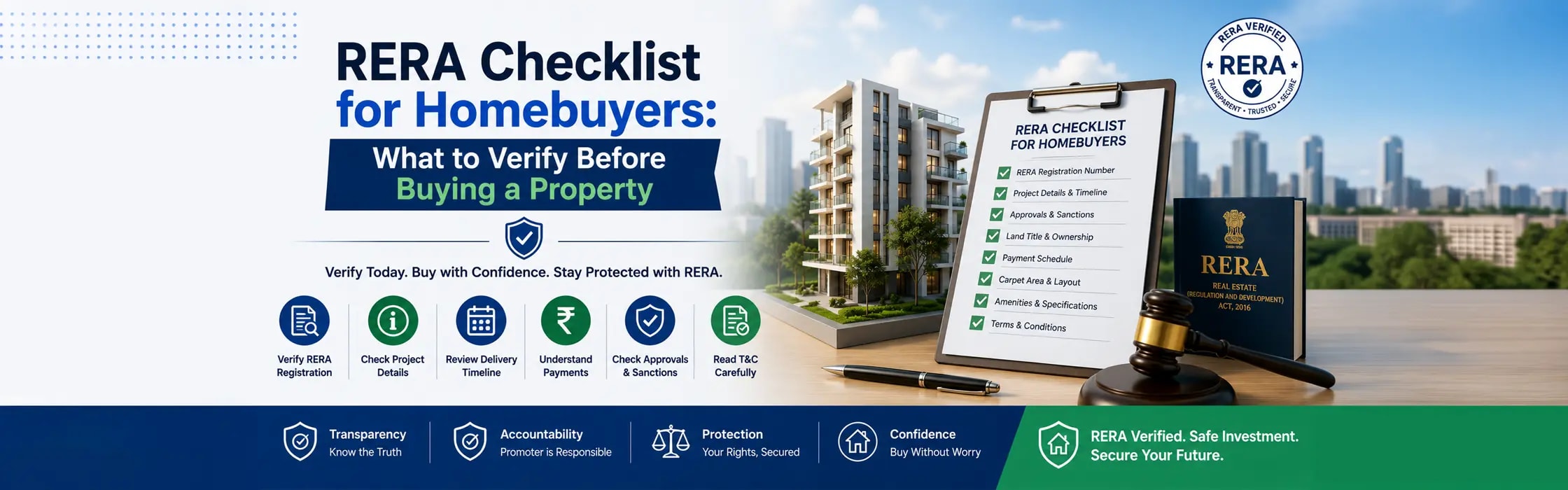
RERA Checklist for Homebuyers: What to Verify Before Buying a Property
If you are planning to invest in real estate for the first time or you are looking to upgrade your lifestyle, stability and security are the two most crucial factors in determining how your home will benefit you and your family in the long run. This assurance of both stability and security not only comes from a reliable developer who has great previous experience but also from the RERA Verification of the house and a RERA-registered project.
The Real Estate (Regulation and Development) Act, or RERA, was an act implemented in 2016 that helps homebuyers by requiring developers to provide them with correct project details. Hence, it is extremely important for homebuyers to check RERA registration, legal property document verification, construction process verification, and other details.
What is RERA
The Real Estate (Regulation and Development) Act, 2016, commonly known as RERA, established a regulatory framework for the real estate sector in India. Under the Act, state and union territory RERA authorities oversee the registration and regulation of eligible real estate projects and promoters.
Property verification through RERA helps homebuyers avoid the following issues that can often occur during their entire journey of property investment:
- Delays in project completion or possession
- Inadequate or unclear project information
- Changes to approved plans or project details
- Unclear or inaccurate area information
After RERA came into effect, it became essential for developers to register their eligible projects with the relevant authority in the states. RERA-registered projects provide buyers with important project information, but independent legal and financial checks are still essential.
Why Do Homebuyers Need RERA
RERA is important to evaluate legal safety and a developer’s reliability, so it is more than just financial planning. However, it is also required for:
Greater Project Clarity
Developers are required to disclose key information such as:
- Project specifications
- Sanctioned plans
- Current construction progress
- Expected possession date
- Promoter information
This helps buyers evaluate RERA-registered projects using clear and verified information.
Safeguard Against Misleading Information
RERA helps ensure that developers provide accurate information about:
- Apartment dimensions
- Available amenities
- Completion timelines
- Promised facilities
Accurate Carpet Area Information
Carpet area refers to the actual floor area inside the apartment. RERA requires developers to clearly state the carpet area of an apartment so that buyers can clearly differentiate between carpet area, built-up area, and super built-up area.
7 Essential RERA Checks Before Buying a Property
A developer must give homebuyers the confidence of stability and legal registration documents. So here is the RERA property check every homebuyer must consider and verify before investing in a real estate project.
1. Research the Developer’s Track Record
Before selecting a property, understand the developer’s background.
Verify:
- Developer registration details
- Past projects
- Project delivery history
- Buyer reviews
- Market reputation
Following these RERA guidelines, along with checking the developer's track record, can help buyers make an effective decision.
2. Confirm the Project’s RERA Registration
Always check whether the project is registered under RERA before making a decision.
Verify:
- RERA registration number
- Registered project details
- Promoter information
- Approval details
Do not depend solely on advertisements or verbal assurances. Verify through Official RERA records and complete the RERA verification before investing in a RERA-registered project.
3. Check the Property’s Ownership Records
Verifying land ownership is a crucial step before purchasing a property.
Check:
- Title deed
- Ownership documents
- Encumbrance Certificate
- Land-related approvals
An Encumbrance Certificate can help determine whether the property has existing legal claims, mortgages, or other financial liabilities. This is an important part of property verification.
4. Verify All Necessary Project Approvals
Before booking a property, make sure the required approvals are in place.
- Approved layout plans
- Building plan approval
- Government permissions
- Environmental clearances
- Fire safety approvals
These checks are an important part of following RERA rules and ensuring proper property verification before purchasing a property.
5. Assess the Current Construction Progress
Visit the project site and compare the actual progress with the information provided by the developer.
Evaluate:
- Current construction stage
- Development progress
- Expected completion date
- Planned possession timeline
Checking the actual construction status against registered project information is an important part of a RERA property check.
6. Understand the Complete Payment Structure
Before booking, make sure you understand all the costs involved.
Review:
- Booking amount
- Payment schedule
- Additional charges
- Maintenance expenses
- Registration costs
- Home loan eligibility
Understanding the payment structure is also an important part of the property buying checklist, helping buyers avoid unexpected financial obligations.
7. Verify the Possession Details
The possession timeline can significantly impact your home-buying decision.
Check:
- Promised possession date
- Completion Certificate status
- Occupancy Certificate status
- Applicable possession conditions
These property-buying checklist points should be evaluated thoroughly before taking another step to move into your new home.
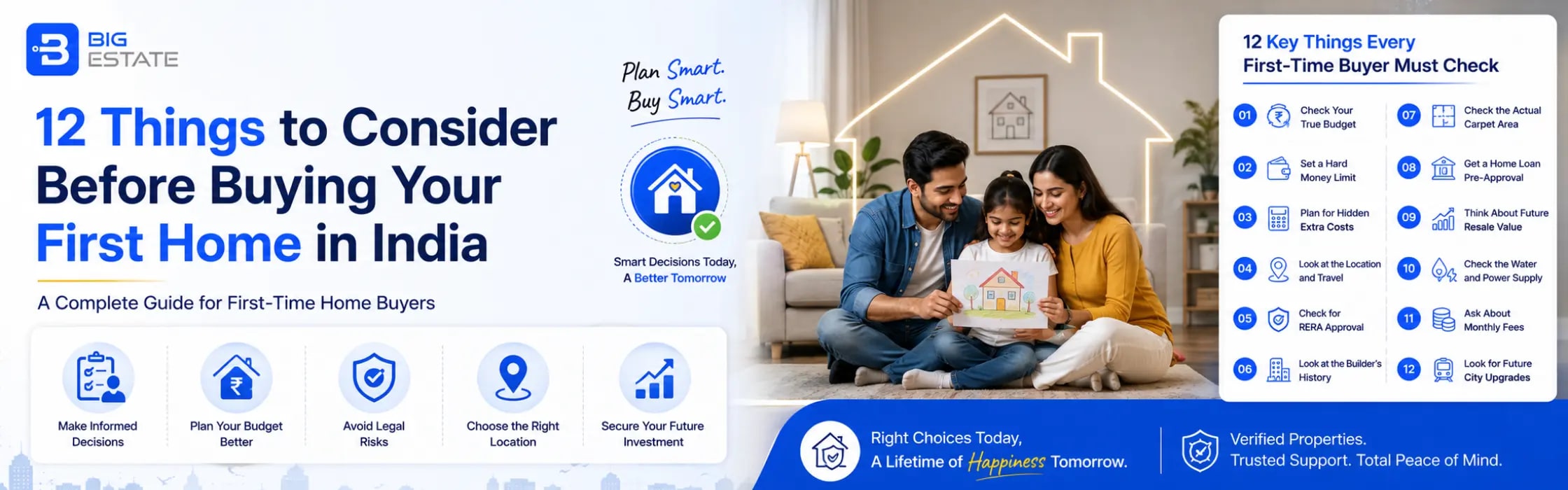
Also Read: 12 Things to Consider Before Buying Your First Home in India
Documents Every Homebuyer Must Verify
Along with this checklist, the following legal documents should also be verified:
- RERA Registration Certificate: To confirm the project or property document verification
- Title Deed: To get the ownership rights of the property
- Sale Agreement: To define the terms of purchase
- Approved Layout Plan: To confirm authorised development
- Encumbrance Certificate: To show legal liabilities
- Completion Certificate: To confirm the completion of construction
- Occupancy Certificate: To allow occupancy legally
- Property Registration Documents: To establish ownership
Checking these documents as part of RERA verification can provide greater clarity before making a property investment.
How to Verify RERA Registration Online
To check the RERA registration online, you can visit the official RERA website of your respective state and in the search field you can enter the RERA number that is provided to you by your developer. If the project is already registered with RERA, you will be able to view all the information that your developer has submitted to the respective authority. It is important to check the details provided regarding the real estate project.
Common Mistakes Buyers Make While Buying Properties
1. Accepting Unilateral Agreement Documents
Sometimes real estate developers incorporate unilateral clauses in the agreement, which include unilateral cancellation of allotment or notification, and many a time a home buyer accepts the clause without analyzing the documents properly, which contain restrictions.
Clauses that preclude buyers from asserting future legal claims. Therefore, RERA authorities render these rulings in the buyer's interest.
2. Making Cash Payments at the Booking Stage
If home buyers pay in cash, it becomes difficult for them to get their money back or cancel the property booking. They usually pay the booking amount in cash to avoid stamp duty, which may lack strong legal recognition and hence, deals get cancelled, and homebuyers cannot even get a refund. So buyers must avoid making all cash transactions at the booking stage.
3. Blindly Accepting a RERA Number.
Home buyers should not believe a number exists without checking if it matches the specific phase, land parcel, builder name or approved layout on the official portal.
4. Believing Verbal Promises
Home buyers trust broker assurances about amenities, clubhouse or delivery dates that can be omitted from the registered builder-buyer agreement. Every written record should be examined completely before taking another step.
Conclusion
To buy a home is one of the most essential decisions taken while keeping all the financial drawbacks in mind. RERA verification can help homebuyers make that decision with greater clarity and confidence. Hence, one must verify registration and approvals through ownership documents, construction progress, payment terms, and possession details while following the applicable RERA guidelines.
Big Estate helps homebuyers explore property and project information so they can compare options and make more informed property decisions, including evaluating RERA-registered projects.