Home Buying Checklist: 15 Things Every Buyer Should Verify
Most people prepare for months before buying a home while comparing localities, shortlisting builders and negotiating on the price. Then, a lot of that careful planning gets rushed. Documents get skimmed instead of read; loan terms get accepted without comparison. This home buying checklist is designed to help you slow down the final stage, verify important property documents, understand your financing and identify potential issues before you commit your money.
Why a Home Buying Checklist Matters
A home purchase touches multiple systems at once, like legal records, banking, municipal authorities, insurance and the property itself. Missing a step in any one of these doesn't usually show up immediately. It shows up later, often at the worst possible time: during resale, during a loan application or after a monsoon reveals a structural issue nobody flagged.
The 15 Point Home Buying Guide
1. Confirm the Seller's Legal Ownership
Before anything else, you should verify that the person selling the property actually has the legal right to sell it. Check the title deed and trace the ownership history.
2. Check for Existing Loans
Request an Encumbrance Certificate from the relevant authority. It can help identify registered mortgages, claims or other recorded encumbrances associated with the property.
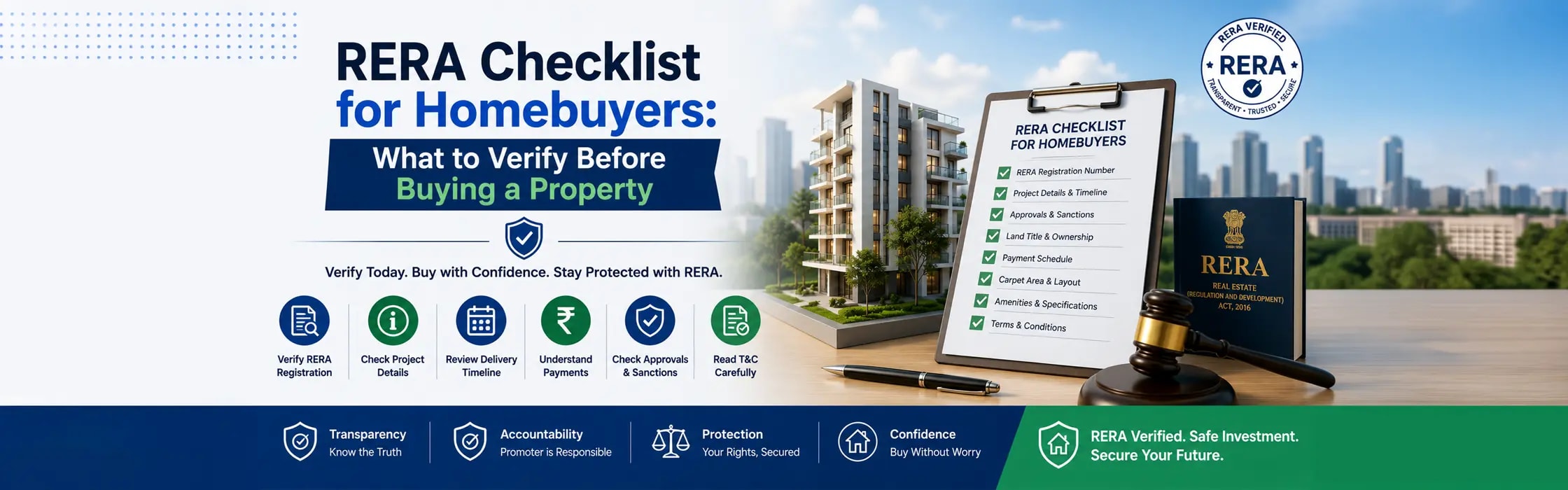
3. Verify RERA Registration (For New Projects)
If you're buying into an under-construction project, check the project's RERA registration on the official state portal.
4. Review the Approved Building Plan
Match what's actually been built against the sanctioned building plan. Unauthorised additions can create legal complications.
5. Check Occupancy and Completion Certificate
Occupancy Certificate (OC): Generally confirms that the building is approved for occupation, subject to applicable local regulations.
Completion Certificate (CC): Generally confirms that construction has been completed in accordance with the sanctioned plans and applicable requirements.
6. Confirm Property Tax
Ask for the latest property tax receipts, utility bills and details of any other applicable dues. Confirm that outstanding liabilities have been cleared before completing the transaction.
7. Understand Your Home Loan Eligibility
Home loan eligibility depends on the following factors:
- Age: Home loan applicants are typically required to be at least 18–21 years old, depending on the lender. The maximum age at loan maturity also varies, often falling around 60–70 years for salaried applicants and potentially higher for some self-employed applicants.
- CIBIL Score: A stronger credit score can improve your chances of loan approval and may help you access more competitive loan terms. Lenders use their own eligibility criteria.
- Income Stability: Lenders typically expect 1- 2 years of stable employment for salaried applicants or 3 or more years in business for the self-employed.
- FOIR Limit: Total EMI obligations shouldn't exceed 40 to 55 percent of gross monthly income.
- Loan-to-value ratio: Banks typically finance 75- 90 percent of the property's value.
8. Compare Loan Offers Across Lenders
Don't accept the first offer from your regular bank without comparison. Interest rates, processing fees and the prepayment terms vary across banks, NBFCs and housing finance companies.
9. Get the Property's Market Value Independently Checked
A bank's loan valuation and the seller's asking price aren't always aligned with actual market value. An independent check helps you negotiate from an informed position.
10. Complete Legal Verification With a Property Lawyer
Legal verification should be done by a lawyer who can catch inconsistencies in the ownership chain and confirm the sale agreement protects your interests. Property documents verification should also be completed to ensure all relevant property documents are in order.
11. Check for Pending Litigation
Ask specifically whether the property or the larger project is tied up in any ongoing legal dispute.
12. Review the Sale Agreement
Before the final sale deed, the sale agreement lays out the terms both parties are committing to, including the payment schedule and possession date. Read this as carefully as the final deed itself.
13. Complete Property Registration Correctly
Property registration is a critical part of legally recording the transfer of ownership in transactions where registration is required. Making a payment alone does not establish legal ownership.
14. Arrange Home Insurance Before Possession
A home insurance policy can protect your property against covered risks such as fire, natural disasters and other specified losses. Buyers should check the lender's requirements and compare suitable policies before taking possession.
15. Do A Final Inspection Before Possession
Before taking possession, conduct a detailed final inspection of the property. Check walls, flooring, doors and windows, electrical points, plumbing, drainage, fixtures, fittings and signs of seepage or damage. Compare the delivered property with the specifications promised in the agreement. Record any defects in writing and request rectification before completing the possession process.
How Much Money Do You Actually Need to Buy a Home?
Here's what buyers typically need to budget for:
| Cost Component | What Buyers Should Budget For |
|---|---|
| Down payment | Depends on property value, lender and applicable LTV limits |
| Stamp duty | Varies by state and property type |
| Registration charges | Varies by state and transaction |
| GST | Applicable mainly to certain under-construction transactions; verify the current applicable rate |
| Brokerage | Depends on the broker and transaction terms |
| Legal fees | Depends on the lawyer and scope of verification |
| Maintenance/deposits | Depends on the project, society and property |
| Home loan charges | May include processing and other lender-specific charges |
The upfront amount you need depends on the property price, lender, loan-to-value ratio, state-level stamp duty and registration charges, applicable taxes and transaction-related expenses. For example, a ₹1 crore property may require a substantial amount beyond the loan amount, but the exact upfront requirement varies by transaction. Buyers should calculate these costs before committing to a property.
Common Mistakes First-Time Buyers Make
1. Skipping RERA verification of the project.
2. Accepting the first home loan offer without comparing rates.
3. Assuming a bank's loan approval means the legal title is clean.
4. Treating home insurance as unnecessary since the property is already mortgaged.
5. Not budgeting for stamp duty and registration charges as part of the total cost.
Conclusion
Buying a home is one of the biggest financial commitments you can make, so rushing the final stage can create problems long after the transaction is complete. From verifying ownership and RERA registration to reviewing loan terms, legal documents, dues, agreements and the property's actual condition, every step matters. A structured home buying checklist can help you slow down, ask the right questions and identify potential issues before you commit your money. Independent legal and financial advice can also be valuable when the transaction involves significant financial or legal complexity.
Big Estate helps homebuyers explore property options and make more informed decisions by bringing property information, project details and comparison tools into one place. Whether you're shortlisting a home, comparing projects or preparing for a site visit, Big Estate helps simplify the home-buying journey.
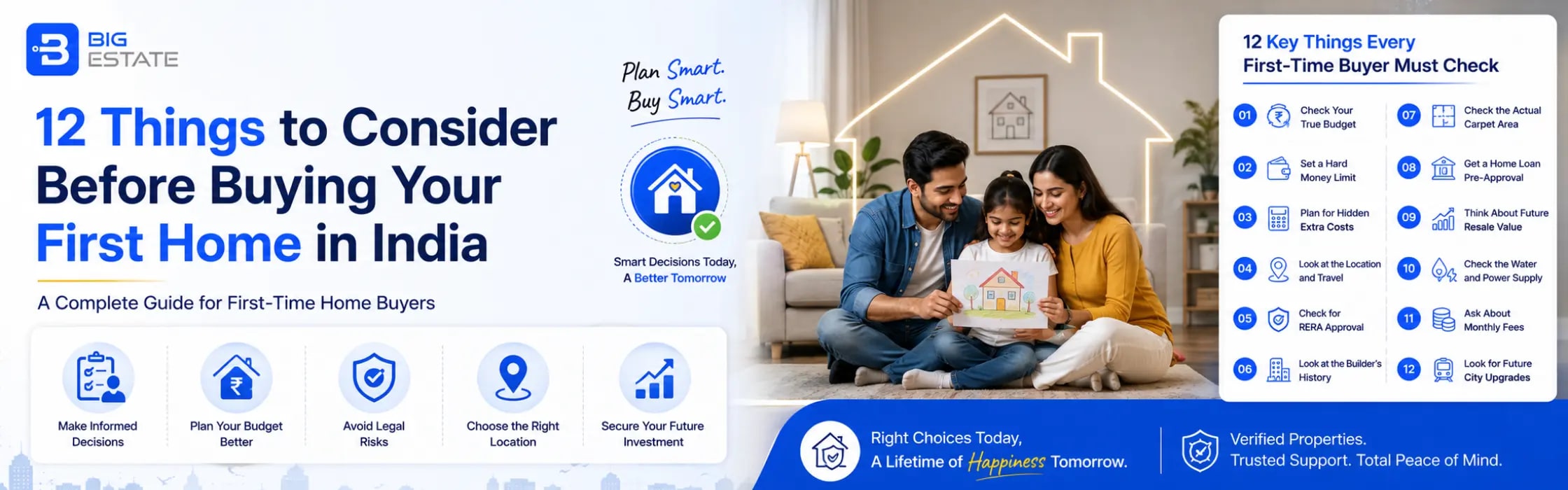
Also Read: 12 Things to Consider Before Buying Your First Home in India
Note: Property registration rules, stamp duty, taxes, lending criteria and approval requirements can vary by state, city, lender and property type. Buyers should verify the applicable requirements with the relevant government authority, lender and qualified legal or financial professional before making a significant financial commitment.