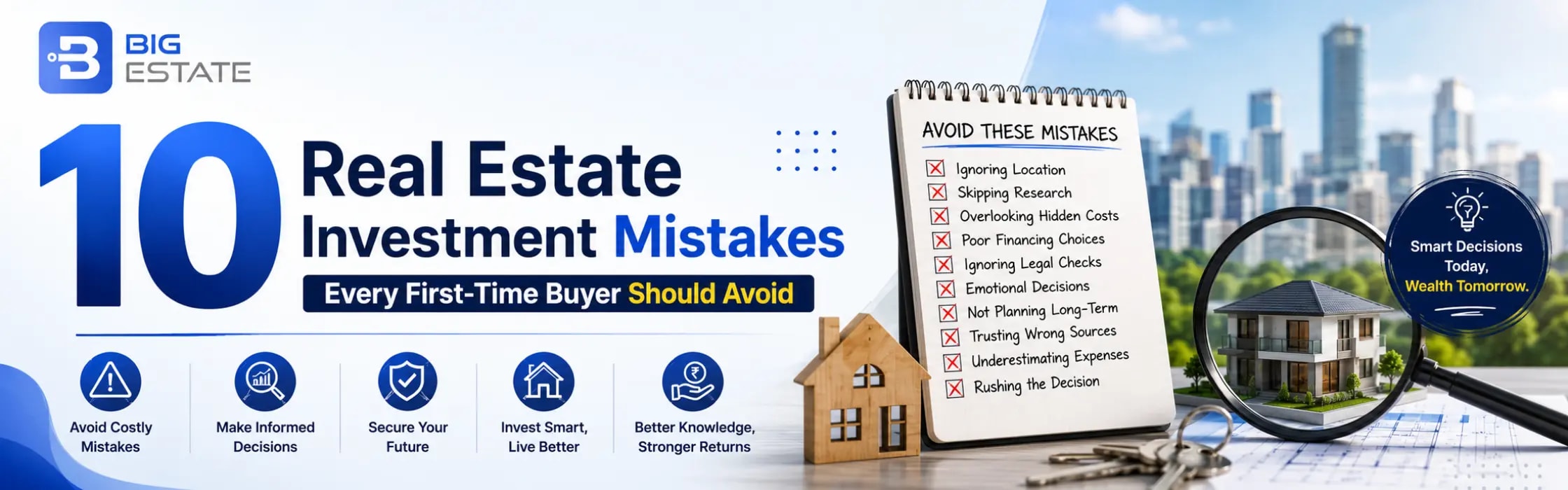
10 Real Estate Investment Mistakes Every First-Time Buyer Should Avoid
Purchasing a property doesn’t mean investing only in four walls; it also means investing in one’s emotions, dreams, years of planning, hard work, and even savings. A homebuyer deserves a home that is worth every second that they spend, so they should leave no stone unturned to ensure their investment is also worth every penny. It is therefore crucial to know which mistakes to avoid when purchasing a property for the first time.
Why Avoiding Mistakes in Purchasing Real Estate is Significant
It is quite common for one to face financial strain when entering real estate markets, especially when they step in for the first time, and they may also go through legal complications and long-term dissatisfaction.
This blog will discuss 10 real estate investment mistakes every first-time buyer should avoid.
1. Not Enough Research
Failing to conduct thorough research on property investment is the foremost mistake every first-time homebuyer makes. Buying a real estate property should not be biased by what homebuyers feel emotionally and what they think rationally and financially. Every type of investment may be successful according to many factors like location, property types, recent market trends, and financial options, so one must also consider property pricing, demand for rentals, vacancy rates, local amenities, and infrastructure developments within the neighbourhood.
2. Choosing a Home Because It’s Cheaper
During property investment, price does come into play, but the lowest-priced property is not necessarily the best choice. Sometimes the lower price comes with compromises in location, connectivity, construction quality, amenities or long-term convenience. Hence, every homebuyer must evaluate these factors:
- Location and accessibility
- Carpet area and layout
- Construction quality
- Amenities and facilities
- Developer's experience
- Maintenance and management
- Future growth potential of the area
3. Avoid Checking the Track Record of the Developer
No matter how exciting your deal looks on paper at present, it should also have a smooth and transparent history. If the past track record of the developer or the company is not well researched, then homebuyers may face the issue of delayed possession, poor construction quality, weak after-sales support or maintenance issues. Before choosing a project, buyers should research:
- The developer's years of experience
- Previous projects
- Project delivery record
- Construction quality
- Customer feedback
- Transparent Communication
4. Not Visiting the Actual Site
Online listings, photographs, brochures and virtual tours are undisputedly significant to shortlist the properties. However, their visual appearance sometimes fails to match the actual site of the property. One of the important home buying tips also includes visiting the property, which allows us to assess the actual neighbourhood road connectivity, construction projects, and distance from essential services.
5. Being Emotionally Driven
Emotional attachment to your new home is essential, but blindly following your heart rather than putting your brain in the decisions of property purchasing might cost you time, planning, and finances. Emotional decisions translate to poor investment, so one must keep a clear head about any investment, and decisions should be made based on facts, data and financial projections, not emotional attachments.
6. Relying Too Much on Debt
Investment in real estate is usually made through debt, resulting in overleveraging that might become trouble for investors if their property earns insufficient cash when market conditions change suddenly. So homebuyers should ensure that their property income covers mortgage payments, taxes and other expenses.
7. Ignoring Construction Quality
Property interiors can be designed or changed according to the owner’s preferences, but construction quality is something that forms the foundation of long-term safety, comfort and durability, so it cannot be overlooked. According to a real estate guide, homebuyers should also review the developer's completed projects to understand:
- Structural planning
- Building materials
- Finishing quality
- Common areas
- Amenities
- Project maintenance
8. Buying Under Sales Pressure
A limited-period offer should never be the deadline for buyers to purchase a real estate property. There are a few essential checks a homebuyer should analyze before buying:
- Compare suitable homes
- Know your payment plan.
- Read the agreement carefully before signing.
- Verify Important Documents
- Check your financial readiness.
- Discuss the decision with your family or an expert.
9. Not Choosing a Relevant Location
In real estate, location is more than just an address—it can directly impact your property’s demand and future value. A well-connected area with good infrastructure, job hubs, schools, transport, and everyday conveniences is more likely to attract buyers and tenants.
Before investing, look beyond the property itself. Check what surrounds it today and what’s coming tomorrow. A promising location can make a big difference to both livability and returns.
10. Ignoring Exit Strategy
Many investors only focus on buying the property, but they never think of exiting from that property, which becomes a challenge when selling the property at a loss if one lacks an exit strategy. So homebuyers must be aware of a certain value and long-term rental income even before buying it.
Conclusion
Many homebuyers not only take rational decisions, but they also follow their intuition to act spiritually, so they also prefer Vastu-compliant homes. They seek the advice of Vastu experts to verify Vastu checklists before buying a flat or any house. Verifying every minor detail before purchasing a home is the need of the hour for every real estate investor. With the right research and guidance, first-time buyers can make confident decisions and turn their property purchase into a well-planned investment. Big Estate helps homebuyers simplify the real estate journey with the right information, property options, and guidance, so you can make your next property decision with greater clarity.