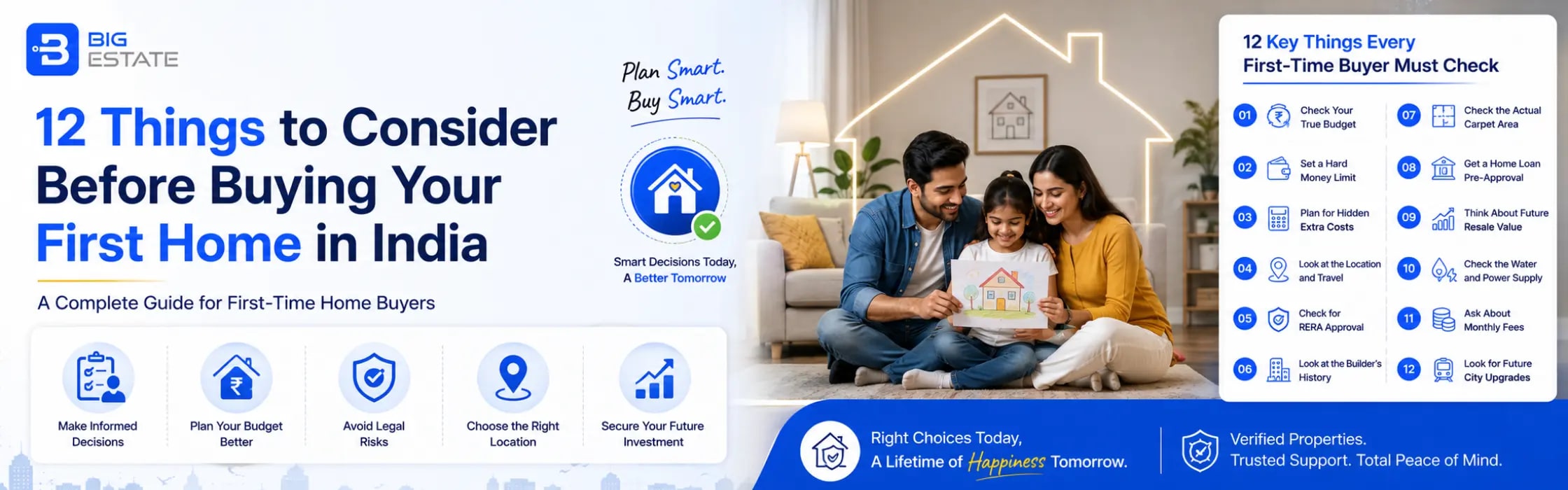
12 Things to Consider Before Buying Your First Home in India
We have all been there. You are scrolling through property apps on a lazy Sunday afternoon. You picture exactly how you would decorate that beautiful living room. It is very exciting to dream about having a place of your own! But then, reality comes in.
Understanding interest rates, saving for down payments, and dealing with builders, changing from renting to owning can feel overwhelming. Being a first-time home buyer is a huge thing.
So, let’s walk through the most important things you need to know before you sign anything. If you are serious about buying your first home, this checklist is exactly what you need.
The Basics
1. Check Your True Budget
Before you look at houses, know your money limits. Buying property in India ties you down. Ask yourself if you will stay in this city for the next five years before you say yes.
2. Set a Hard Money Limit
It is easy to like a fancy, expensive flat. But you must know exactly how much you can pay every month without going broke. These are basic home buying tips that will save you a lot of stress later.
3. Plan for Hidden Extra Costs
Buying your first home is the biggest money choice you will ever make. Many people think the builder's price tag is the final cost. They forget they need 10% to 15% more money for government taxes, registration, and basic painting.
Important Property Checks
Any good property buying guide will tell you to check these three things next:
4. Look at the Location and Travel
Do not just look at the flat. Look at the area. Check how far it is from your office, good schools, and hospitals. Visit the area during rush hour to see the real traffic.
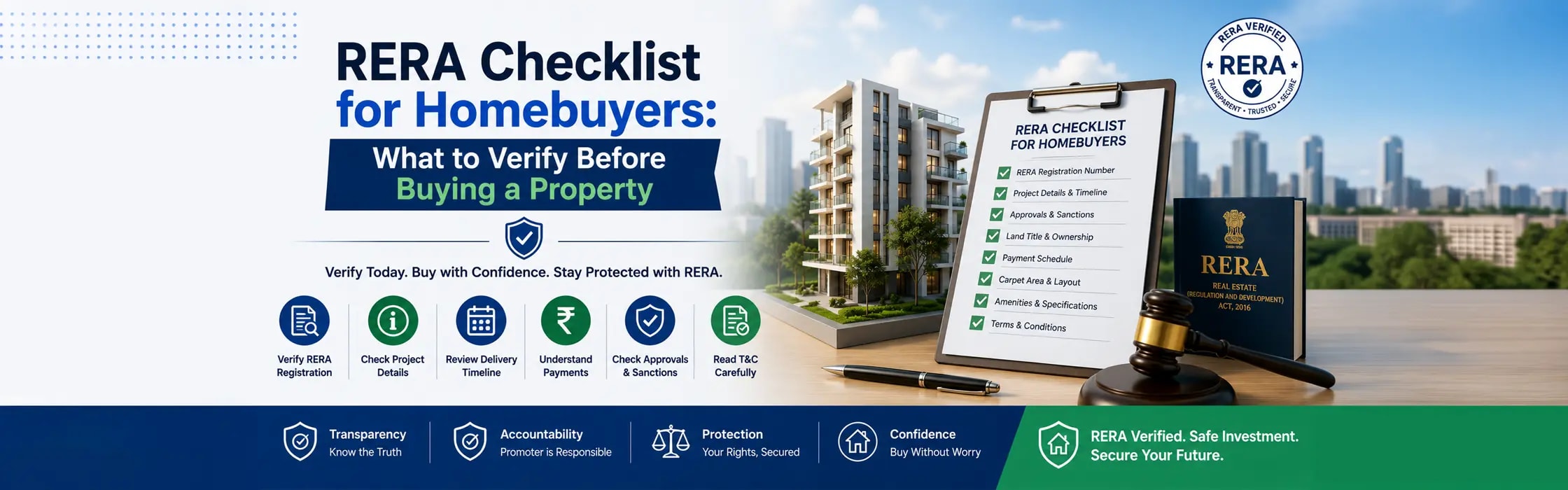
5. Check for RERA Approval
Always make sure the house has government RERA approval. This shows the builder actually owns the land. It keeps you safe from scams and delays.
6. Look at the Builder's History
Check the builder's past work. See if they finish building on time. Ask past buyers if they are happy with their homes.
Space and Money Realities
7. Check the Actual Carpet Area
Do not look at the "Super Built-Up Area". That includes stairs and lobbies you share with others. Ask for the "Carpet Area". This is the real space inside your home where you can actually put a bed and chairs.
8. Get a Home Loan Pre-Approval
Go to your bank and get a loan approved before talking to sellers. It shows you are a serious first-time home buyer and tells you exactly how much money the bank will give you.
9. Think About Future Resale Value
Life changes. Pick a place in an area that is growing. When buying property in India, this ensures you can easily sell the house later if you ever need to move.
Final Must-Do Checks
10. Check the Water and Power Supply
Never assume the water and power are perfect. Ask the neighbors if the power goes out a lot or if they have to buy expensive water from private trucks.
11. Ask About Monthly Fees
Pools and gyms are nice, but you must pay for them every month. Make sure you have enough money to pay these extra fees to the building.
12. Look for Future City Upgrades
Check the news for your area. Are they building a new metro station nearby? These new upgrades can make your property's value go up fast. These simple checks are the best home-buying tips you can follow.
Common Challenges
The biggest trap for a first-time home buyer is falling in love with a glossy sample apartment. Builders use tricks, like custom mirrors and smaller furniture, to make rooms look much bigger than they actually are.
Another major mistake is ignoring the rainy season. You should also visit the neighborhood during heavy rains to check for waterlogging.
How do different people actually choose when buying property in India?
The Renters
A young couple currently paying high monthly rent usually goes for a ready-to-move flat. This way, they avoid paying their rent and a new home loan at the exact same time.
The Future Planners
Someone buying a home for their retirement will often buy an under-construction property early on. They book at a low price today and let the value grow.
Ready-to-Move vs. Under-Construction
If you are confused about which type to pick, here is a property buying guide comparing the two:
| Feature | Ready-to-Move | Under-Construction |
|---|---|---|
| What You See | You get exactly what is in front of you. | You are buying based on a floor plan. |
| Waiting Time | Zero waiting time. | You will have to wait a few years to move in. |
| Taxes | No extra GST to pay. | Subject to GST charges. |
| Cost | More expensive upfront. | Usually much cheaper initially. |
| Risk | No risk of project delays. | You run the risk of construction delays. |
What Do We Learn
- Always keep an extra budget of 10% to 15% above the base price for other costs like registration and basic interiors.
- Never buy a property that isn't registered with the government. It is your biggest safety net.
- A smaller apartment in a highly connected neighborhood is always a smarter buy than a massive luxury flat with bad roads.
Conclusion
Buying your first home should be one of the most exciting days of your life, not a stressful thing. Take your time, do your homework, and never let anyone rush you into signing a deal before you are ready. Keep this property buying guide handy, and you will be well on your way.
But you don't have to navigate these steps alone. If you want the best home buying tips and a platform that does all the basic work for you, check out Big Estate.
Big Estate is designed to protect the first-time home buyer. We only list verified, RERA-approved properties so you never have to worry about legal headaches. Our simple platform helps you easily compare real carpet areas, upfront costs, and neighborhood details.
We ensure that buying your first home is completely transparent and easy. Skip the stress and find a builder you can trust today with Big Estate!