RERA Possession Date: What Homebuyers Can Do If a Builder Delays Handover
For a lot of Indian families, buying a flat is the single biggest financial decision they'll ever make. So when the builder misses the RERA possession date on the agreement, it means paying rent and EMIs simultaneously, delayed plans and money that's locked up with no return in sight. RERA provides specific remedies when a promoter fails to give possession in accordance with the agreement for sale. This blog explains the remedies available for delayed possession, how interest may be calculated and the steps buyers can take when filing a RERA complaint.
What Does "RERA Possession Date" Mean Legally?
The possession date written into your builder-buyer agreement under the Real Estate (Regulation and Development) Act, 2016, is treated as a legal commitment. If the promoter fails to give possession in accordance with the date specified in the agreement for sale, Section 18 of RERA provides specific remedies to the allottee, subject to the facts of the case and applicable state rules.
Section 18 of RERA: Your Two Options When a Builder Delays
Section 18 of the RERA Act, 2016, sets out important remedies for buyers when a promoter fails to complete or give possession in accordance with the agreement for sale.
Option 1: Withdraw and take a refund
If the promoter fails to give possession in accordance with the agreement for sale, the allottee may choose to withdraw from the project and seek the remedies provided under Section 18. If the buyer chooses to withdraw, Section 18 provides for the return of the amount received by the promoter, along with applicable interest and compensation as provided under the Act and applicable rules. The exact refund timeline can vary under the applicable state rules
Option 2: Stay invested and claim monthly interest
If the buyer does not withdraw from the project, Section 18 provides for interest for every month of delay until possession is handed over, at the prescribed rate.
The Interest Rate: What Builders May Owe You
The interest rate applicable to delayed possession can vary depending on the rules governing the project. Many state RERA rules prescribe an interest rate linked to the State Bank of India's Marginal Cost of Lending Rate (MCLR), but the exact formula should be verified under the relevant state's current RERA rules.
Buyers should therefore check the applicable rules and recent orders of their state RERA authority before calculating a delayed-possession claim.
Sample Calculation
Using the commonly cited formula:
Illustrative interest calculation = Amount × Applicable Annual Interest Rate × Delayed Months ÷ 12
For illustration, if the applicable prescribed interest rate is 11% per annum and a buyer has paid ₹50 lakh, one year of simple interest would amount to approximately ₹5.5 lakh.
The actual amount payable can depend on the applicable state rules, relevant payment dates, period of delay and the authority's order.
How to File a RERA Complaint?
Filing a RERA complaint for delayed possession is more accessible than most first-time buyers expect:
1. Gather documentation like the purchase/builder buyer agreement, proof of all payments made and any delay notice or communication from the builder.
2. File online through your state's official RERA portal.
3. Pay the applicable filing fee prescribed by the relevant state RERA authority.
4. Consider professional legal advice where the dispute involves complex contractual, compensation or insolvency issues.
5. Await the proceedings. RERA contains statutory disposal provisions for relevant applications, but actual timelines can vary depending on the authority, nature of the complaint, hearings and appeals.
What Homebuyers Should Check in 2026
RERA portals continue to provide project registration, progress and complaint-related information, but the exact tools and procedures vary by state. In 2026, buyers should check the relevant state RERA portal for the project's registration status, construction updates, extensions, orders and complaint information before deciding how to proceed.
Where a possession delay occurs, buyers should preserve the agreement for sale, payment records, builder communications and project-status records. These documents can help establish the contractual possession date and support a complaint if required.
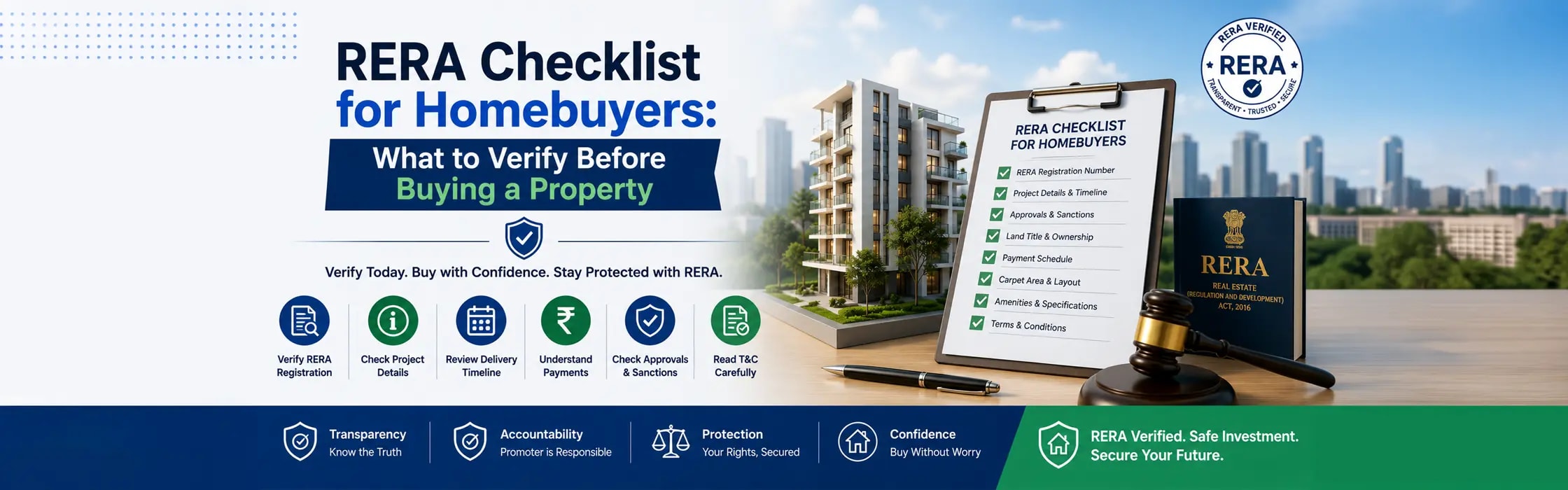
Before taking action, buyers can also use this RERA checklist for homebuyers to verify project registration, possession details, construction progress and other important RERA-related information.
When Force Majeure Applies
RERA recognises force majeure circumstances that can affect the completion of a real estate project. Section 6 allows a project's registration to be extended by the RERA authority on an application by the promoter due to force majeure.
Under the Act, force majeure includes circumstances such as war, flood, drought, fire, cyclone, earthquake or other calamities caused by nature that affect the regular development of the project.
Whether an extension applies in a particular case depends on the circumstances, applicable rules and the decision of the relevant RERA authority.
Why Delayed Possession Matters for Homebuyers
A delayed possession can create financial pressure for buyers who may continue paying rent, home-loan instalments and other expenses while waiting for the property to be completed. Understanding the contractual possession date and the remedies available under RERA can help buyers decide what steps to take when a delay occurs.
What If the Builder Is Insolvent?
If the promoter enters insolvency proceedings, recovery can become more complicated because the insolvency process under the Insolvency and Bankruptcy Code may apply. Homebuyers are recognised as financial creditors under the IBC framework, but the outcome depends on the insolvency proceedings and available assets.
RERA Complaint vs Consumer Court: Which Route to Choose
| Factor | RERA Complaint | Consumer Commission |
|---|---|---|
| Relevant issues | Delayed possession, refund, interest and RERA violations | Consumer disputes including deficiency in service and unfair trade practices |
| Legal representation | Depends on the case and representation chosen | Depends on the case and representation chosen |
| Filing fee | As prescribed under applicable rules | Depends on applicable consumer rules |
| Timeline | Statutory disposal provisions apply, but actual timelines can vary | Depends on proceedings, complexity and appeals |
| Remedies | Remedies available under RERA and applicable rules | Remedies available under consumer protection law |
For a possession-delay dispute, RERA provides remedies specifically addressing delayed possession, including refund with applicable interest or interest for continuing with the project. Consumer forums may also be relevant depending on the nature of the dispute and the remedies being sought.
Conclusion
A delayed possession date can have significant financial consequences for a homebuyer, particularly when rent, loan payments and other expenses continue while the property remains unfinished. Section 18 of RERA provides remedies when a promoter fails to give possession in accordance with the agreement for sale, including withdrawal with return of the amount received by the promoter along with applicable interest and compensation, or continuing with the project and claiming interest for the period of delay.
Before filing a complaint, buyers should verify the possession date in the agreement, preserve payment records and builder communications, check the project's latest RERA status and confirm the interest rate and procedure applicable in their state.
Big Estate helps homebuyers discover and compare properties by location, budget and property type. Buyers can use the platform to shortlist suitable projects and then verify RERA details, possession timelines and other documents before making a decision.
If you are buying your first property, read this complete guide to buying your first home in India for a step-by-step overview of budgeting, property verification, financing, agreements and possession.
Note: RERA procedures, interest rates, refund timelines and other requirements can vary by state and may change over time. Buyers should verify the latest information on the relevant state RERA portal and consider professional legal advice for specific disputes."