Daily CRM Workflow for Real Estate Teams: Complete Guide
Have you ever lost a great client because someone forgot to call them back? Or maybe two agents from your office accidentally called the same buyer on the same day? It is frustrating, embarrassing, and ultimately costs you money.
When a real estate team is small, sticky notes and WhatsApp messages might be enough to get by. But as your business grows, things get messy. To run a smooth office, you need everyone on the same page. That is where a good CRM workflow comes in. It connects your marketing, sales, and field agents so no one drops the ball. A good and reliable CRM Software acts like the heart of your office and keeps everything running smoothly.
Here is how top-performing real estate teams plan their day to close more deals together.
Why Real Estate Teams Need a Daily CRM Workflow
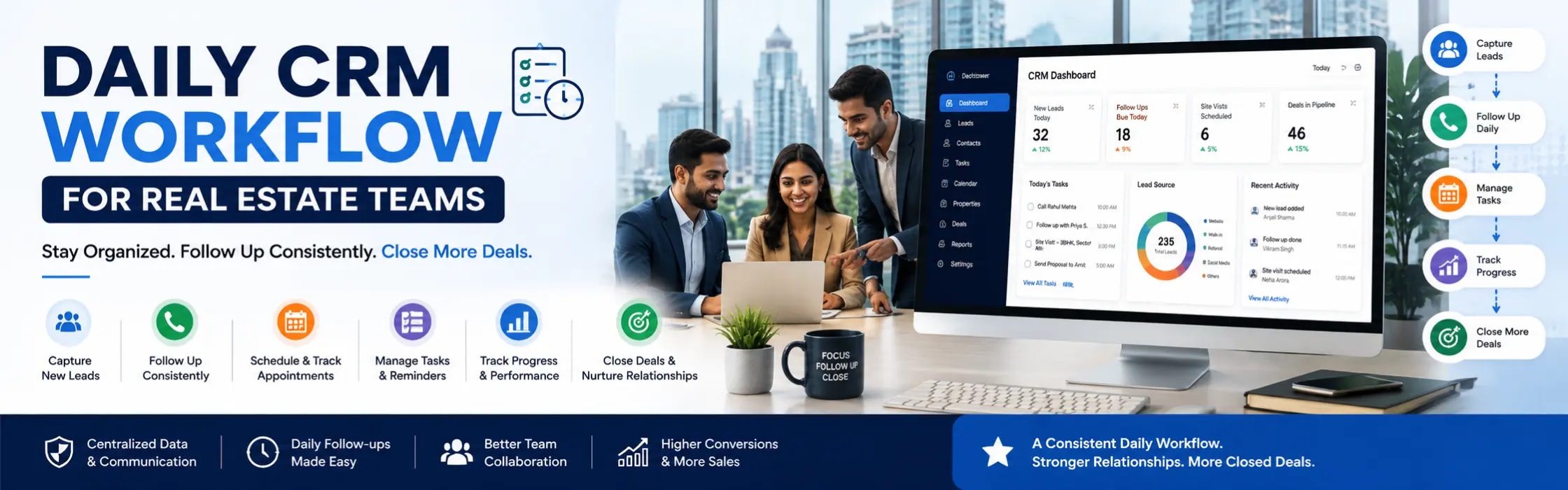
A good day starts with a clear plan and ends with a clean desk.
Morning (8:30 AM - 10:00 AM)
- Managers: Managers check the CRM Software to see all the new leads that came in overnight from ads or property websites.
- Inside Sales: The calling team hits the phones. Their only job is to call fresh leads, check their budget, and mark them as hot or cold.
- Field Agents: Agents look at their daily schedule and read the notes on their assigned buyers before heading out to show properties.
Mid-Day (10:00 AM - 4:00 PM)
- Easy Handoffs: If a caller finds a buyer who wants to see a house today, they book a site visit right into the field agent’s calendar.
- Quick Updates: After showing the house, the field agent types the buyer's feedback directly into their phone from the car. If the buyer wants different options, the office team is alerted instantly.
Evening (4:30 PM - 5:30 PM)
- Wrap-Up: Before going home, agents send out brochures and clear their tasks. Managers check the system to make sure no leads are sitting untouched.
This routine works because a central system locks a lead to one agent, so buyers do not get annoyed by multiple calls. Plus, if someone takes a sick day, managers can look at the CRM workflow and easily hand the deal to another agent without asking the buyer to repeat their story.
Also Read: Why Real Estate Companies Should Use AI + CRM Together
CRM Automations for Real Estate Teams
Once your team learns the basic daily habits, let the tools do the hard work.
-
Automated Lead Distribution
Instead of manually assigning new inquiries, the CRM can distribute incoming leads among agents based on predefined rules such as round-robin assignment, location, property type or team availability. This creates a more consistent allocation process and reduces the risk of leads being missed or assigned twice.
-
Lead Scoring
Give points to buyers who open your emails or check prices on your website. Your team can then call the buyers with the most points first.
-
Follow-Up Alerts
If a buyer completes a site visit and no follow-up activity is recorded within the expected timeframe, the CRM can send an automatic reminder to the assigned agent or manager. This helps reduce missed follow-ups and keeps promising leads moving through the sales pipeline.
CRM Metrics Real Estate Managers Should Track
Instead of just checking if your agents look busy, team leaders need to track the numbers that actually matter.
| What to Check | What It Means | Why It Matters |
|---|---|---|
| Lead Response Time | Minutes taken to call a new lead | Calling a lead in 5 minutes gets a much better response rate. |
| Pipeline Drop-Offs | Where buyers lose interest | Shows if agents need help closing deals or if leads are bad. |
| Conversion Performance | Calls made vs. deals closed | Shows who is actually selling, not just talking on the phone. |
Also Read: Real Estate CRM Features Every Real Estate Company Needs
How Does CRM Support Post-Sale Customer Management?
Your CRM workflow does not end when the buyer pays the booking amount. After the sale is when you secure future business.
First, the system can automatically tell the finance team to start the loan paperwork, freeing up the sales agent to find the next buyer. If you sell under-construction property, the system can send automatic emails when construction reaches a new stage and a payment is due. Finally, it can remind agents to call the buyer six months after they move in. This keeps the relationship warm and is the perfect time to ask for referrals.
To make all this happen, your CRM Software must connect with the apps your buyers use every day in India. Save every WhatsApp chat and voice note safely in the system, not just on the agent's personal phone. Connect your property portals so new leads pop up on your screen instantly.
How to Get Real Estate Agents to Adopt a CRM
The best CRM Software is useless if agents will not log in. Change is hard, so start slow. Ask them to just type in names and phone numbers first. Most importantly, stop taking updates in Excel or personal chats. If a deal is not on the screen during a meeting, it does not exist.
You also need to protect customer data. A well-configured CRM can use role-based access controls to limit which leads and customer details each employee can view. Depending on the platform, additional controls such as masked contact information, activity tracking and restricted data exports can provide another layer of protection when employees change roles or leave the company.
Also Read: Best AI CRM Software for Real Estate Companies in India
How Big Estate Enterprise Supports Real Estate Teams
Managing a growing real estate team requires more than simply storing contact information. Teams need a central system for capturing leads, assigning enquiries, tracking follow-ups and maintaining visibility across the sales pipeline.
Big Estate Enterprise brings these activities together in a real estate-focused CRM environment. Teams can manage incoming leads, coordinate assignments, track WhatsApp interactions, organise follow-ups and maintain customer information in one place.
For managers, this can provide greater visibility into lead distribution, agent activity and pipeline movement. For sales teams, a structured workflow can reduce repetitive administrative work and make it easier to focus on customer conversations, site visits and deal progression.
Explore how Big Estate Enterprise can help your real estate team organise leads, automate follow-ups and manage the sales pipeline from one platform.