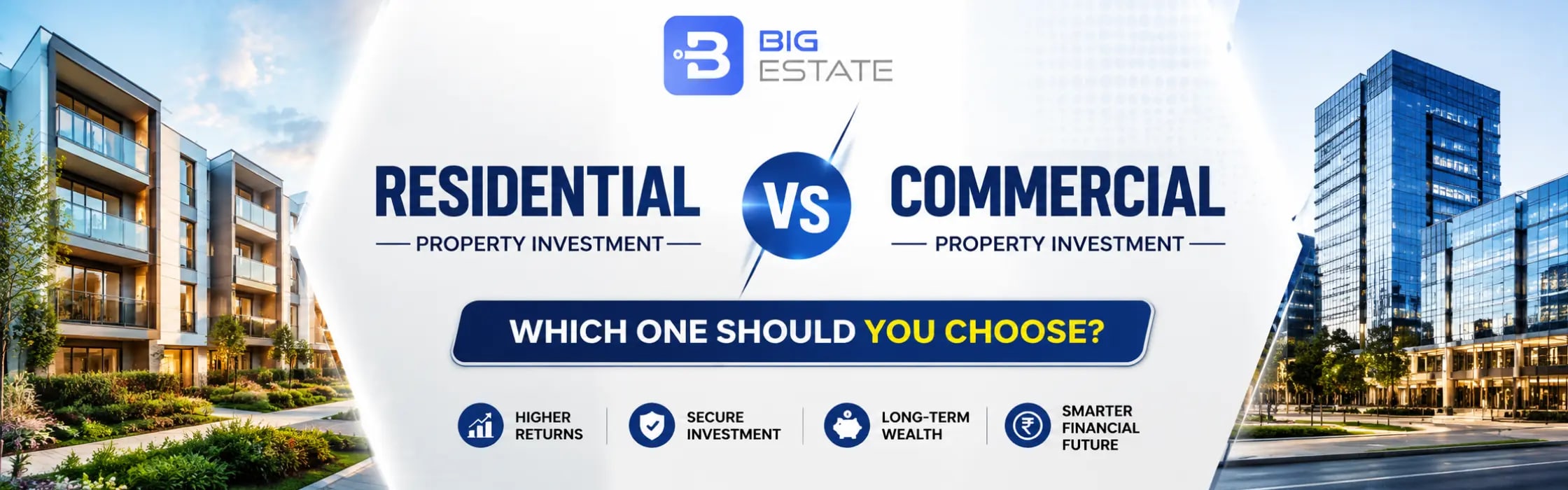
Residential vs Commercial Property Investment: Which One Should You Choose?
When Someone comes into a bit of extra capital and starts thinking about real estate, the first question is always the same: should this money go into a residential unit or a commercial space?
The two paths differ in almost every way that matters, like how much you'll earn, how much risk you're taking on, how the property gets financed and how much time you'll actually spend managing it. Getting this choice right shapes the next several years of your portfolio, so it's worth understanding exactly what you're signing up for before you commit. Let's break down in this blog on how residential and commercial property are different and compare their investment.
What Exactly Is the Difference?
Residential property investment covers homes people actually live in, such as single-family houses, condos, and small multifamily buildings with four units or fewer. Investors buy these to earn rental income, benefit from appreciation over time and sometimes both.
Commercial property investment, on the other hand, covers space used for business activity that includes office buildings, retail units, industrial warehouses and multifamily properties with five or more units that shift into the commercial category. This classification directly affects your financing terms, your tax treatment, your lease structures and ultimately your returns.
Why Is The Distinction Important?
Every investor is chasing the same three things- strong returns, manageable risk and a workload they can actually keep up with. Residential and commercial properties deliver these in very different ways. Residential real estate investing focuses on properties where people live and it's a practical entry point because housing demand stays fairly constant. There's a reliability to that.
Commercial property, in contrast, tends to be a higher-return but higher-effort game. Commercial real estate includes office buildings, retail spaces, industrial properties and larger multifamily assets and generally gives longer leases along with higher income potential. That said, it also reacts sharply when the economy slows down, since the business tenants are far more sensitive to downturns than someone renting a home to live in.
How the Numbers Actually Compare
Recent industry reporting gives a consistent picture. It is as follows-
- Residential properties deliver 5 to 7 percent annual returns while commercial properties tend to generate 10 to 12 percent ROI, largely because commercial space commands higher rent per square foot and even locks in longer lease terms.
- Commercial leases run anywhere from three to ten years, which gives investors a more predictable and stable cash flow.
- Down payment requirements also diverge sharply as commercial properties generally require 20 to 40 percent down while residential properties can be financed with as little as 3 to 5 percent down.
- As of late 2025, the median U.S. home sale price sat around $410,800, giving residential investors a reasonably accessible entry point compared to most commercial spaces.
A quick analysis:
| Factor | Residential Property | Commercial Property |
|---|---|---|
| Typical Annual Return | 5- 7% | 10- 12% |
| Lease Length | Usually 12 months | 3- 10 years |
| Down Payment | 3- 5% | 20- 40% |
| Tenant Type | Individuals/families | Businesses |
| Demand Stability | High and consistent | More cyclical |
| Management Complexity | Moderate | Higher |
Factors Worth Knowing While Investing
A few things to weigh honestly before choosing between residential and commercial property investment:
- Capital Requirements: Commercial deals demand more cash upfront, which can shut out newer investors or force them to bring in partners.
- Vacancy Risk: A vacant commercial unit can be empty for months during a lease transition, while residential vacancies tend to fill faster.
- Management Intensity: Residential investing requires more frequent, hands-on attention for things like tenant communication, repairs and turnover, unless a property manager is brought in to handle it. Commercial tenants often handle interior maintenance themselves under the lease terms.
- Economic: Commercial performance is closely tied to business cycles; when companies cut costs, office and retail space are often the first things reduced.
Best Practices Before You Commit
Whichever direction you're leaning, a few habits tend to separate profitable investors from frustrated ones:
- Get comfortable with your local market before expanding elsewhere because vacancy rates, rent trends and buyer demand vary enormously by city and even by neighborhood.
- Factor in vacancy periods, maintenance costs and property management fees before assuming a return figure is guaranteed.
- Don't underestimate the value of a good property manager, especially for residential portfolios where tenant turnover eats into returns quietly.
- Some experienced investors hold both residential and commercial assets specifically to balance stability against higher-yield opportunity.
- Understand your lease terms in detail before signing- particularly for commercial deals where clauses around maintenance responsibility and renewal terms can materially change your actual return.
The Main Takeaways
- Commercial property investment tends to offer higher returns and longer lease stability but demands significantly more capital and carries more exposure to economic cycles.
- Residential property investment is generally more accessible to enter and benefits from consistent housing demand, though returns are typically more modest.
- Residential real estate has historically been the more conservative option that offers steady returns with comparatively lower risk than commercial assets.
Conclusion
Whichever path you choose, one thing stays constant: real estate investing is still built on relationships with tenants, buyers, brokers and the market itself. No dataset replaces the value of knowing your local market and managing your relationships well. What good systems do is buy back the time you need to actually focus on that.
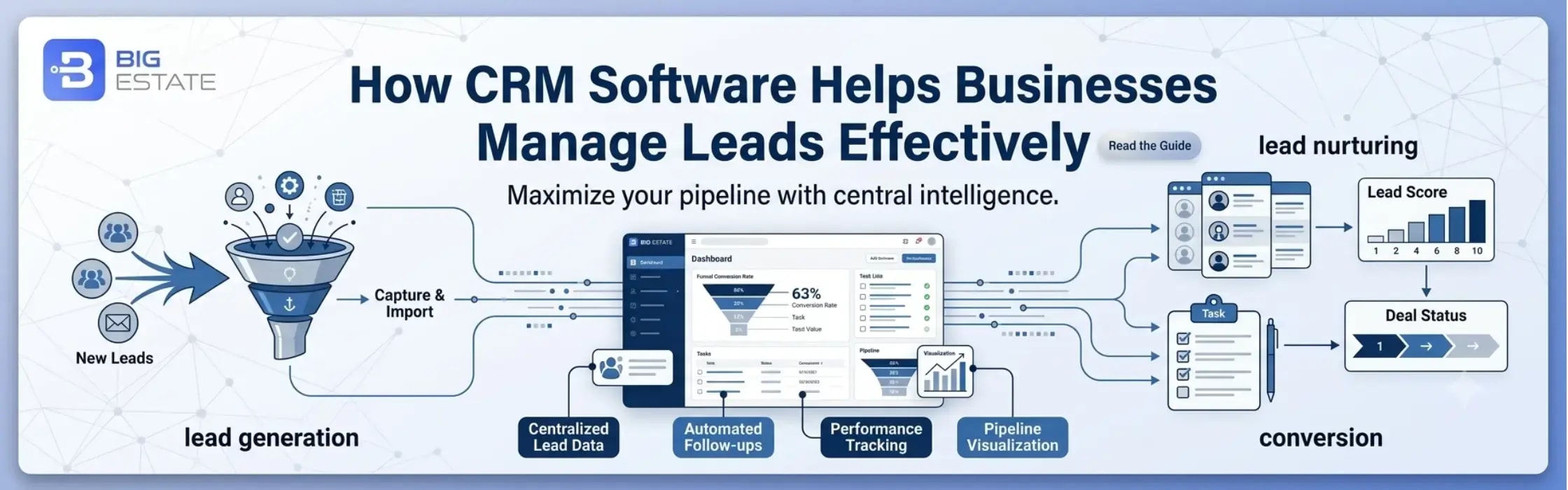
That's exactly the gap Big Estate is built to close. Instead of tracking the leads, lease inquiries, and tenant communication across scattered tools, what Big Estate does is bring it all into one CRM built specifically for real estate professionals, whether you're managing a handful of residential rentals or building out a commercial portfolio. With instant lead responses and every conversation logged into a single dashboard, you spend less time chasing details and more time actually closing the deals that grow your portfolio.