Real Estate Lead Generation Strategies in India 2026
The way Indian buyers search for property has changed significantly. Instead of relying only on sales offices, brochures and traditional advertising, many buyers now use Google, property portals, social media, video content and online reviews before contacting an agent or developer.
This shift has made real estate lead generation in India a more structured process. Businesses need to reach buyers at different stages of their research journey, capture enquiries efficiently and follow up consistently across multiple channels.
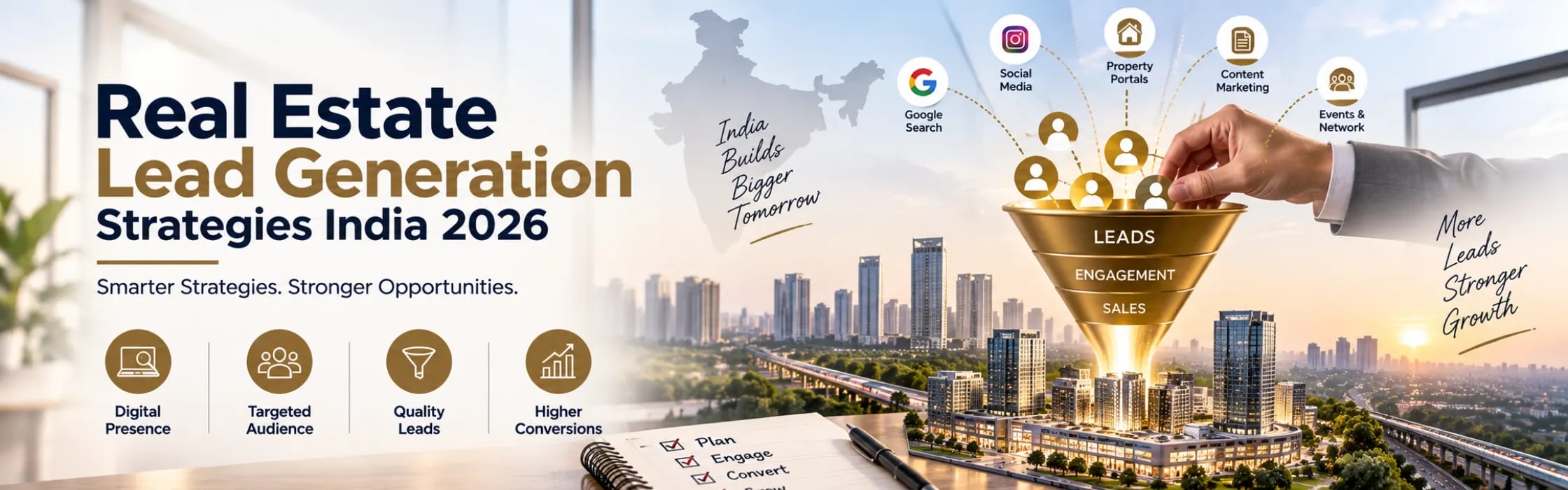
In this guide, we explore practical real estate lead generation strategies for 2026, including SEO, Google Ads, property portals, video content, WhatsApp follow-ups, referrals and lead-tracking systems.
Why Traditional Real Estate Lead Generation Is No Longer Enough
Property buyers now research homes online, compare listings, check locations, watch videos and read reviews before contacting an agent or developer. This means relying on a single lead source can limit your reach and cause you to miss potential buyers during their research journey.
Property portals still play an important role, but real estate businesses can get better visibility by combining portals with SEO, Google Ads, social media, WhatsApp and other owned channels. A multi-channel approach also gives sales teams better control over lead data and makes it easier to track which sources are generating qualified enquiries.
7 Effective Real Estate Lead Generation Strategies for 2026
Here are some of the key channels Indian agents and developers can use to attract and nurture potential buyers:
1. Hyper-Local SEO
Real estate is inherently local and buyers search phrases like "3BHK flats near [specific locality]" rather than broad city-wide terms. Ranking for these hyper-local searches can attract buyers with clearer location and property preferences than broader searches such as “flats in Bangalore.”
2. Google Search Ads With Intent-Based Targeting
Someone searching "3BHK flat in Pune under 80 lakhs" is actively shopping. Search campaigns are particularly useful for capturing high-intent prospects because the user's query often reveals their location, property type and budget.
This makes Google Ads an important part of a broader strategy for generating real estate leads online.
3. Fast and Optimised Landing Pages
Landing-page speed can affect user experience, engagement and conversion performance, particularly on mobile devices. Real estate landing pages should load quickly, make the property information easy to scan and place the enquiry or WhatsApp CTA where users can find it without unnecessary scrolling.
Along with speed, focus on clear project details, pricing or price ranges where appropriate, location information, floor plans, amenities, trust signals and a simple enquiry form.
4. Video and Drone Content
Neighbourhood walkthroughs and client testimonials help buyers visualise a property before ever contacting a salesperson. Video content can improve engagement and help prospects understand the property, layout, surroundings and amenities before contacting the sales team.
5. WhatsApp for Direct Follow-Up
WhatsApp can be useful for quick responses, sharing brochures and property details, confirming site visits and maintaining follow-up conversations after an enquiry. Structured WhatsApp follow-up sequences can help sales teams respond quickly, share relevant property information and maintain consistent communication with prospects.
6. Tracked Campaigns
Using multiple lead-generation channels can help real estate businesses reach more potential buyers. These may include property portals, Google Ads, Meta Ads, WhatsApp, SEO and organic content.
Track cost per lead, qualified leads, site visits and bookings to identify the best-performing channels and allocate the budget accordingly.
7. Referrals and Warm List Broadcasts
Referrals from past buyers, WhatsApp outreach and organic Instagram or YouTube content can provide relatively low-cost lead opportunities, particularly for agents with limited advertising budgets.
Also Read: Top Lead Generation Strategies for Real Estate Businesses
Property Lead Generation Strategies: Portal Comparison
Portal performance in India varies by city and segment, so testing more than one is usually worth it before committing spend to a single platform:
| Platform/Channel | Best Use |
|---|---|
| 99acres | Property discovery and listing-based enquiries |
| MagicBricks | Property listings and buyer enquiries |
| Housing.com | Residential property discovery and enquiries |
| Google Search Ads | High-intent property searches |
| Meta Ads | Audience targeting, awareness and lead generation |
| SEO | Long-term organic visibility |
| Lead communication and follow-up | |
| Big Estate | Lead management, CRM, automation and sales tracking |
Budgeting for Real Estate Lead Generation in India
There is no single marketing budget that works for every real estate business. Spending depends on factors such as property value, project size, city, target audience, sales targets and the expected cost of acquiring a qualified lead.
Small agencies: A starting budget of ₹25,000–₹75,000 per month can be used for testing selected portals and digital advertising channels, depending on the market.
Developer projects: Some businesses use a percentage of projected project revenue as a starting point for marketing allocation. A 1–3% range is sometimes used as a planning benchmark, but the actual budget should be determined by project economics, sales targets and acquisition costs.
The important point is to measure cost per qualified lead, cost per site visit and cost per booking, rather than judging campaigns only by the number of leads generated.
How to Generate Real Estate Leads Online: A Practical Sequence
Here’s a workable order:
1. Build a fast and mobile-optimised website with clear property pages and simple enquiry forms.
2. Target hyper-local and intent-based keywords through SEO and Google Ads.
3. Run video content like walkthroughs, drone tours and testimonials across Instagram and YouTube.
4. List on 2 to 3 relevant portals and track cost per closing on each.
5. Set up WhatsApp automation for quick responses, lead qualification and structured follow-up.
6. Segment your leads by budget, location and buying stage.
7. Track cost per lead, cost per qualified lead, site-visit rate and cost per booking, then reallocate budget based on actual sales performance.
Also Read: AI Lead Generation: How Businesses Can Automate Customer Acquisition
Common Mistakes That Hurt Lead Quality
1. Relying entirely on portals without any owned channels.
2. Running generic, broad keyword campaigns instead of hyper-local.
3. Ignoring landing page speed that quietly erodes conversion rates.
4. Treating WhatsApp as an afterthought instead of a structured follow-up.
5. Tracking only cost per lead instead of qualified leads, site visits and bookings.
Conclusion
Real estate lead generation in India is no longer about generating as many enquiries as possible. The focus should be on reaching the right buyers, capturing their information, responding quickly and measuring which channels actually contribute to site visits and bookings.
A strong strategy can combine hyper-local SEO, Google Ads, property portals, social media, video content, referrals and WhatsApp follow-ups. The next step is connecting these channels to a system that helps your sales team organise and follow up with every enquiry.
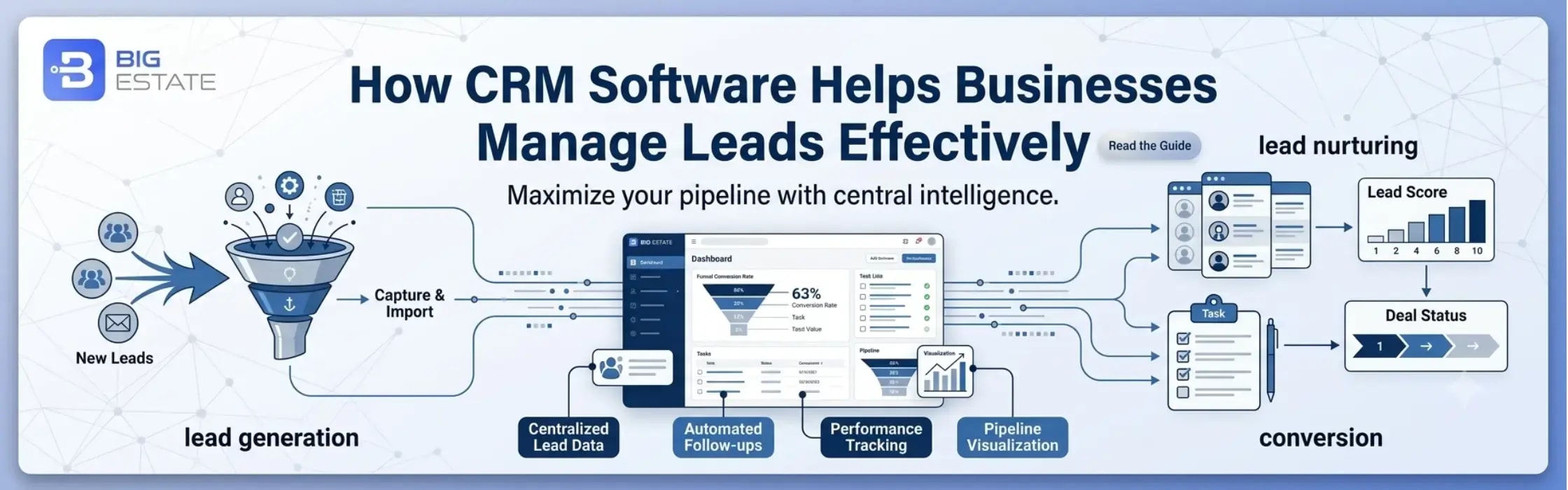
Big Estate Enterprise helps real estate businesses manage leads, track customer interactions, automate follow-ups and monitor sales activity from a central platform. This can help teams turn digital enquiries into better-organised sales opportunities and site visits.
Also Read: Why Fast Lead Response Matters in Real Estate Sales