Best CRM for Real Estate Agents vs Builders: Which One Should You Choose?
Did you know that waiting just a few extra minutes to call a customer could cost you the sale? According to research from Harvard and MIT, if you reply to a new lead within five minutes, you are 100 times more likely to actually reach them, and 21 times more likely to turn them into a real buyer.
This is exactly why choosing the right CRM for real estate is necessary. However, finding the perfect system is where many professionals get tripped up, often confusing solo-agent software with massive developer platforms.
The day-to-day hustle of an agent is different from the multi-project chaos of a property builder. Let’s break down exactly what sets them apart and help you find the perfect system.
What Are We Actually Talking About?
A CRM for real estate agents is entirely focused on speed, communication, and relationships. It is built to instantly capture inquiries from property portals, automate follow-up texts, and keep a solo agent or small team deeply connected to individual buyers looking for their dream home.
A builder CRM, on the other hand, is like an operational engine. It manages massive multi-project inventory, tracks the ROI on massive marketing campaigns, and aligns sales data across giant teams.
Why Is Knowing the Difference So Important?
Because picking the wrong one will absolutely affect your sales efficiency, an agent using a developer system will get confused in complex inventory menus and messy workflows just trying to text a lead back.
Meanwhile, a builder using a basic property sales CRM will not be able to have an idea when it comes to tracking which specific ad campaigns are actually selling out the new high-rise project. Finding the right fit is the difference between closing deals effortlessly and fighting with your software every single day.
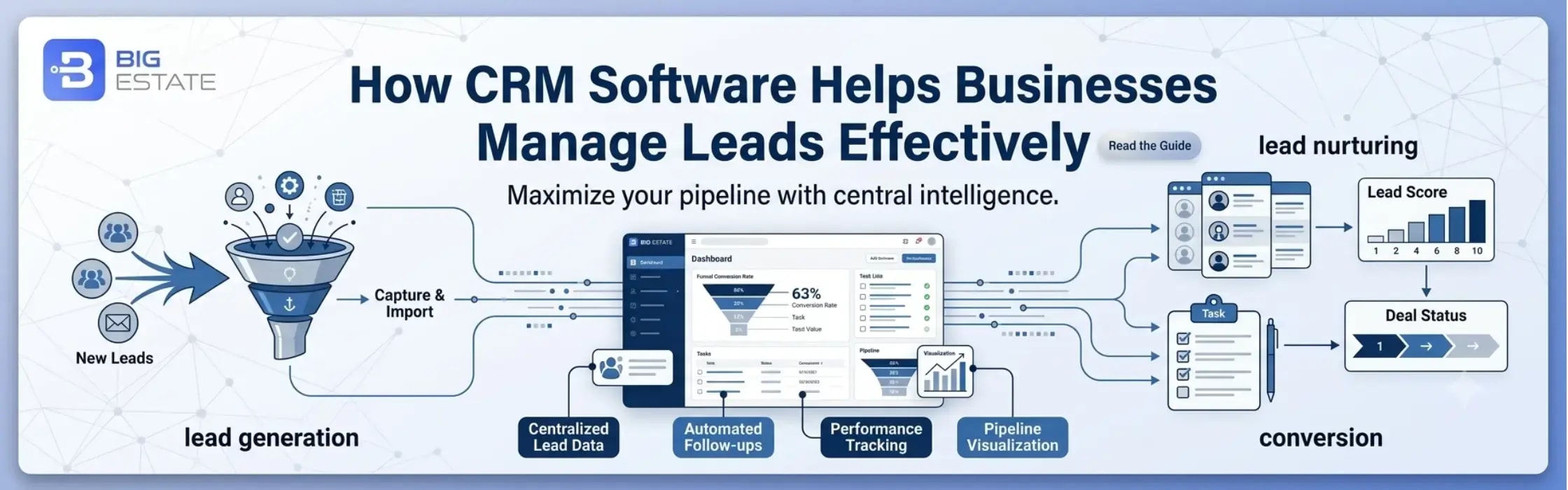
How CRM Works
Whether you are showing open houses every weekend or laying the foundation for a 300-unit subdivision, a solid system follows a pretty specific rhythm to keep your pipeline moving.
Step 1: The Instant Catch
For an agent, the system instantly pulls in leads from Zillow, your website, or Facebook ads. For a builder, it’s grabbing data from massive project landing pages. The second a prospect raises their hand, their info is logged automatically.
Step 2: Automatic Follow-ups
Nobody buys a house in the first text. A great CRM for real estate agents sets up automated "drip campaigns," sending helpful emails about the neighborhood or texting a quick follow-up while you are out walking a job site.
Step 3: Closing the Deal
Once they decide to buy, the software transforms into a transaction manager. It tracks everything from mortgage approvals to construction milestones so the deal doesn't blow up at the last second.
The Benefits: What the System Does for You
Fast Responses
If you don't call a web lead back in five minutes, they are calling your competitor. A good system texts them back in five seconds.
Perfect Inventory Tracking
For developers, the software gives you a real-time visual dashboard showing exactly which units are sold, held, or vacant, preventing double-bookings.
Ending the Sticky-Note Chaos
Whether you are handling ten buyers or five hundred, having every single conversation securely stored in one place means you never drop the ball on a deal.
Common Setup Hurdles
Adopting new tech can be painful. The biggest hurdle for agents is mobile apps. If the system takes too many clicks to log a note, agents will just use their native phone apps and ruin the tracking data.
For developers, the major headache is complexity. You are trying to connect marketing, on-site sales, and construction teams. If the new system doesn't work with your current tools, it will just slow everything down.
Best Practices to Keep Things Moving
- Make it mobile-friendly: If it isn't easy to use on a smartphone from a car, it’s basically useless.
- Start simple: Automate simple things first, like welcome texts. If you try to build a 40-step follow-up sequence on day one, you’ll simply end up spamming people.
- Clear up your lists: Holding onto dead leads from three years ago clutters your pipeline. Clean your data regularly.
Comparison: For Real Estate Agents and Builders
Here is a real estate CRM comparison:
| Feature | CRM for Real Estate Agents | Builder CRM |
|---|---|---|
| Best For | Solo realtors and small teams | Large developers and construction firms |
| Main Focus | Fast texting and buyer relationships | Multi-unit inventory and marketing ROI |
| Key Strength | Easy access from your phone | Tracking massive sales teams and projects |
Choose the Right Tool
At the end of the day, real estate is an incredibly competitive game. If your software is slowing you down, you are actively losing money to the person across the street. To win, you need to review a real estate CRM comparison and pick a tool built for your exact daily workflow.
This is exactly why high-growth teams choose Big Estate. It eliminates the need to compromise between speed and power. Big Estate offers instant 60-second lead response automation so agents never miss a buyer, while also providing inventory tracking and team management that builders rely on. It is the CRM for real estate agents and developers alike, wrapping enterprise-grade power into a simple, mobile-friendly design your team will actually want to use.