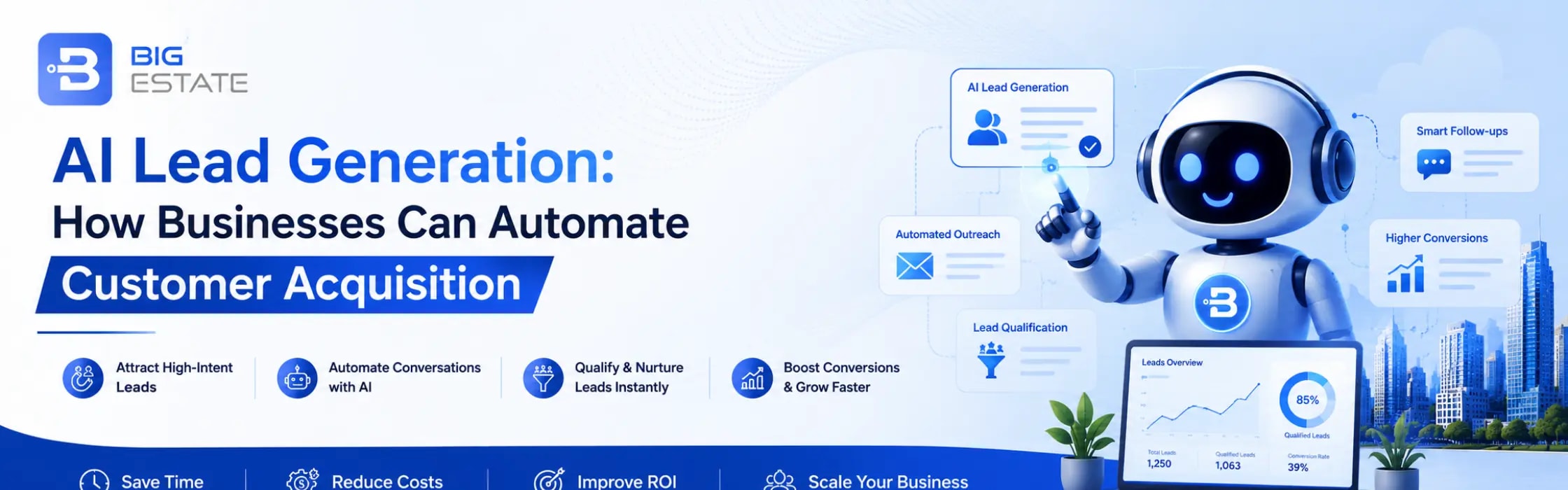
AI Lead Generation: How Businesses Can Automate Customer Acquisition
Companies often lose 30-40% of valuable leads every day because prospects don't receive a timely response. However, we can avoid this problem with AI lead generation software that will follow up with prospects when they show interest. In this blog, we will explain how automated lead generation functions, where it fits in the sales process, and what you should know before you decide to implement it in your company.
How AI Lead Generation Is Changing Customer Acquisition
Manual outreach is a slow process because sales representatives can talk to only a few prospects at a time. With the help of AI lead generation technology, leads can be contacted or followed up with in seconds, thanks to machine learning, AI marketing tools, and natural language processing.
According to IBM, AI helps companies get better quality leads by analysing the behaviour of potential customers in real time and in the past.
Harvard Business Review: A response given in minutes can significantly increase the probability of qualifying a lead; the speed of acting becomes one of the main factors of the customer acquisition process.
-
Customer response time has decreased from hours to seconds.
-
The qualification process takes place without human involvement.
-
Automated lead generation works within CRMs.
How AI Improves Lead Conversion
-
Immediate Response: Get in touch with your lead within seconds after the inquiry.
-
Qualification of Leads: Prospects are scored according to their needs, budget, and timeline.
-
Automatic Follow-ups: Do not forget about hot leads by nurturing them on time.
-
CRM and sales process synchronisation: AI lead generation keeps every interaction logged and automatically updated in CRM.
-
Meeting and Demo Scheduling: Books calls directly onto a rep's calendar.
Salesforce, HubSpot, and other industry platforms utilise artificial intelligence-powered technologies to manage lead scoring, automatically send follow-up letters, and operate CRM systems, indicating that the use of AI has become a standard trend in modern business.
The AI Lead Generation Workflow
-
A lead fills out a form on the website or portal.
-
AI instantly verifies the enquiry and initiates the first interaction.
-
Qualifying questions establish intent and timeline.
-
Warm leads are routed directly to a human agent.
-
Colder leads are sent to the automated nurturing system.
Benefits of Automating Customer Acquisition
-
Faster response improves conversion odds.
-
Consistent qualification reduces wasted sales effort.
-
24/7 availability means no lead goes unanswered overnight.
-
Centralised data improves forecasting.
-
Lower cost per qualified lead over time.
According to McKinsey, companies that incorporate AI technologies into customer-facing processes increase their efficiency and concentrate more on real communication instead of doing monotonous tasks.
AI Lead Generation vs Traditional Lead Management
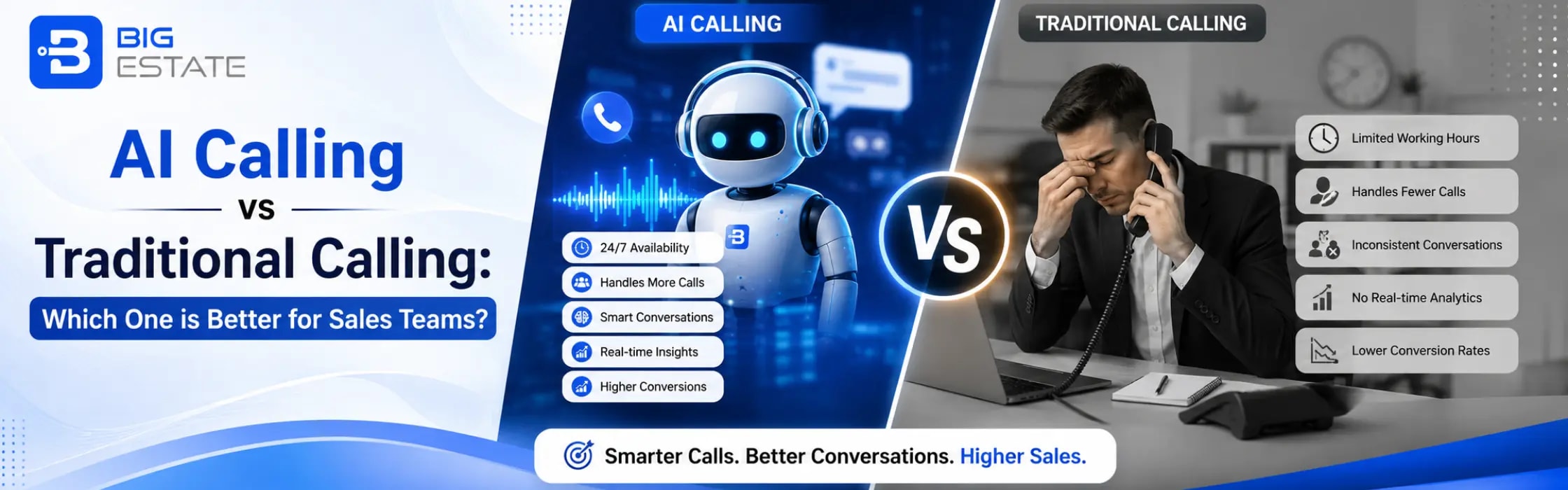
Traditional lead management relies on manual dialling and inconsistent follow-up timing. AI lead generation automation standardises the first response and applies the same qualification logic to every lead, day or night. It doesn't remove the sales team; it ensures every lead gets a timely first touchpoint before a human takes over.
Best Use Cases for AI Lead Generation
-
New project launches with a sudden lead surge.
-
Portal enquiries needing an instant reply.
-
Missed-call recovery outside business hours.
-
Long-distance or NRI enquiries across time zones.
-
Re-engaging older, unconverted database leads.
Best Practices for Implementation
-
Start with one part of the funnel before scaling.
-
Keep qualifying questions specific to the offering.
-
Have the data synchronised with the current CRM rather than parallel systems.
-
Measure the success of campaigns weekly, instead of quarterly.
-
Respect consent rules: TRAI's amended telecom regulations require verified consent and opt-out handling for commercial calls in India.
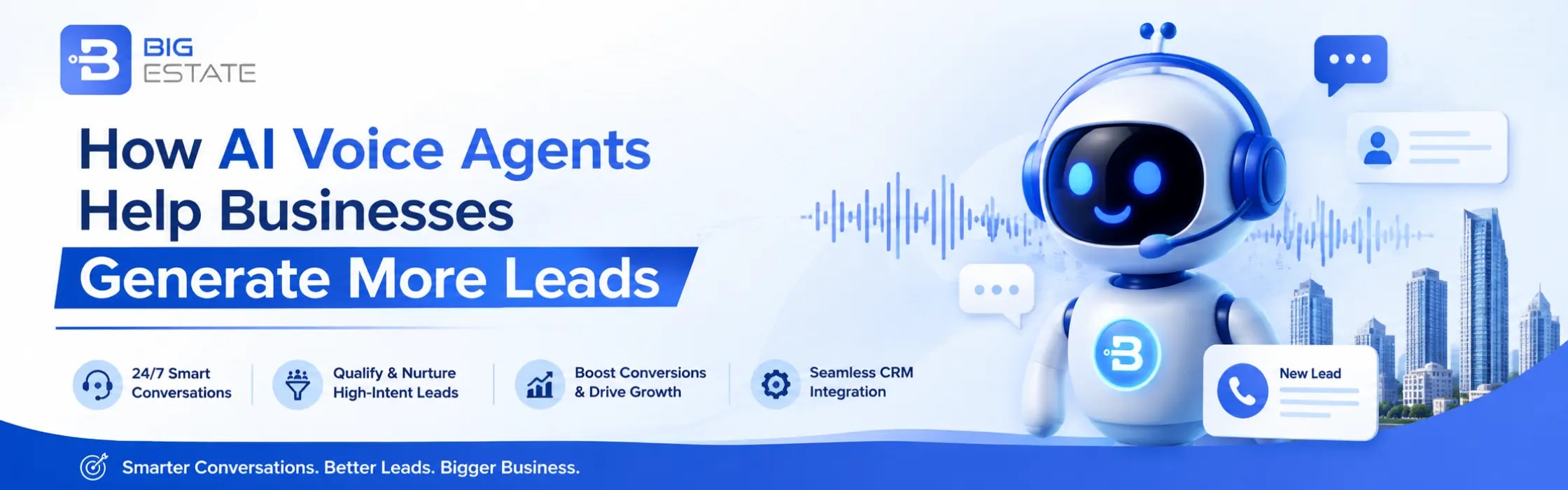
Platforms like Big Estate combine AI lead generation with voice automation, CRM integration, and real-time qualification to help businesses respond instantly and convert more enquiries.
Common Customer Acquisition Problems AI Solves
-
Delayed first response that lets competitors reach the lead first.
-
Leads dropped after two or three follow-up attempts.
-
No visibility into which leads are actually sales-ready.
Key Takeaways
-
AI lead generation shortens response time from hours to seconds.
-
AI supports sales teams by handling repetitive tasks while human representatives focus on closing deals.
-
AI marketing tools now sit inside CRMs rather than beside them.
-
Compliance with legal regulations should not be regarded as an option.
-
Adoption works best when it supports the sales team, not replaces it.
Why Businesses Are Adopting AI Lead Systems
Global platforms such as Ylopo and Structurely have built AI voice and text systems for real estate lead qualification, with reported gains in qualified-lead volume. Enterprise CRMs like BoomTown and CINC have added similar layers for larger teams. In India, Gurgaon-based digital and proptech teams are building comparable lead generation automation into their own workflows.
Conclusion
AI lead generation is becoming standard infrastructure for businesses that can't afford to lose leads to slow response times. Used well, it strengthens the sales process instead of replacing the people running it. Real estate developers must enjoy the perks of being a client of Big Estate and you should stop letting time be the stumbling block in the path of effective lead generation, restricting customers from reaching your doorsteps. Big Estate manages lead generation in real-time that helps real estate businesses flourish in no time.
Ready to Automate More Leads?
If your team is still calling leads back an hour or a day after they enquire, that gap is where deals are quietly going to whoever answers first. You don't need to automate the whole funnel on day one. Pick the step costing you the most leads right now- first response, midnight portal enquiries, or the follow-up nobody remembers- and start there. Measure what changes over a few weeks, then build outward.
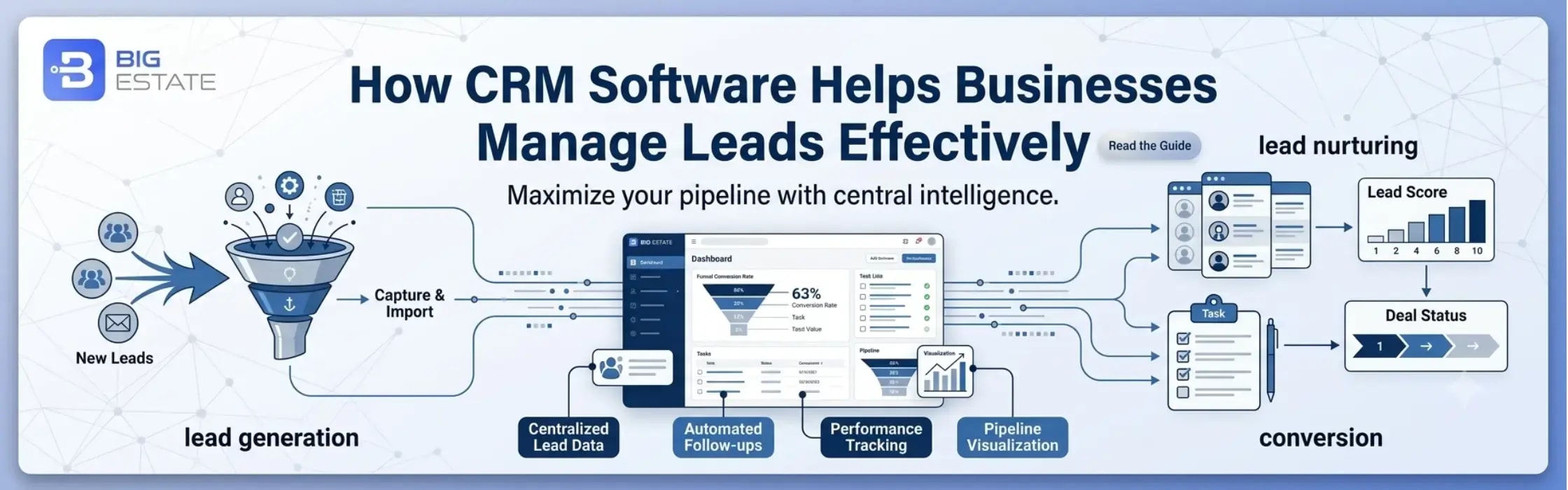
Also Read: How CRM Software Helps Businesses Manage Leads Effectively